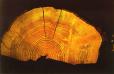
Radiocarbon dating
Radiocarbon dating is a well-known method for determining the age of materials up to the age of approximately 50,000 years.


Showing 1061 - 1080 of 1717 results
Radiocarbon dating is a well-known method for determining the age of materials up to the age of approximately 50,000 years.
Project focuses on enhancing crop productivity in Asia Pacific countries by improving soil and water.
Research on a rare type of superconducting intermetallic alloy
Powerful combination of deuteration and neutron scattering used to characterise structure of molecules on surface of nanoparticles.
Research to identify past human interactions with the environment and clarify information which may result from human impact or responses to changing environments.
Parents can use their NSW Government Creative Kids Voucher to pay for ANSTO's School Holiday workshops.
3D models of multilayered structures on engineering scale from nanoscale damage profiles.
Research undertaken by Flinders University, the University of Cincinnati (US), Guangzhou University (China) and ANSTO has evaluated a new process to encapsulate fish oil in nanoparticles
Research has demonstrated that internally generated neutrons could be used to effectively target micro-infiltrates and cancer cells outside of the defined treatment regions.
Modelling and experimentation - a powerful combination in probing mechanical properties of ion irradiated materials through nanoindentation.
ANSTO has collaborated on a study assessing the impact of the commonly-used food additive titanium dioxide (TiO2) on gut microbiota and inflammation.

In Australia and the Southeast Asia basin, the ANSTO facility offers a wide range of unique nuclear-beam techniques for cultural heritage research.

ANSTO's unique capabilities are being used to develop a quick analytical tool to determine the geographic origin of seafood and authenticates quality.
A team of researchers from ANSTO and University of Technology Sydney have set a record by conducting thin film experiments at 1100 degrees C.
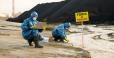
Billions of tonnes of iron ore tailings are generated each year from the mining industry. Converting these toxic tailings into soil-like materials which can develop and sustain plant and microbial communities is critical for mine site remediation and improved environmental outcomes.
On average, there is now 17 per cent less rainfall across Western Australia’s south-western region than was recorded prior to 1970. This rainfall reduction has economic, social and environmental implications for the region, in particular for the growing capital of Perth, as well as water-dependent industries in the state.

Dharawal Mural tells an ancient story. Aboriginal and Torres Strait Islander viewers are advised that webpage contains images of people who have died.