ANSTO Innovation Precinct briefing for NSW Parliament
ANSTO shared plans for an Innovation Precinct in southern Sydney at a breakfast event.


Showing 1141 - 1160 of 2480 results
ANSTO shared plans for an Innovation Precinct in southern Sydney at a breakfast event.


Report to the independent nuclear regulator, ARPANSA, and the IAEA
ANSTO researchers have taken up the challenge to develop a coating for the cladding used in nuclear reactors to prevent it from taking up hydrogen and releasing it if temperatures get too high and repair itself if damaged.
Research investigates traditional Indigenous Australian burning techniques in managing landscape and reducing fuel loads.
ANSTO expert in molecular imaging contributed to international workshop.
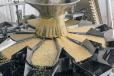
Understanding the molecular structure of ingredients can improve the qualities of food.
ANSTO joined the Australian delegation at the 68th General Conference of the International Atomic Energy Agency (IAEA) last month in Vienna, participating in a number of insightful side-events and fruitful bilateral partnership meetings.
A research team from ETH Zurich developing and characterizing silicon carbide devices for power electronics, recently spent time at ANSTO’s Centre for Accelerator Science to use a specialised beamline in their investigations.
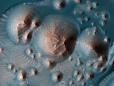
ANSTO provides a range of capabilities using neutrons, X-rays and infrared radiation to study the solids, liquids and gases that might be found in materials in our solar system and beyond.
ANSTO provides a range of capabilities using neutrons, X-rays and infrared radiation to study the solids, liquids and gases that might be found in materials in our solar system and beyond.
In early February, ANSTO was honoured to host the International Atomic Energy Agency (IAEA) National Liaison Officers Meeting and Sub Regional Approach to the Pacific Islands (SAPI) Programme, which focused on the development and delivery of the IAEA Technical Cooperation Programme in the Pacific.
A team of researchers including the University of Rochester, CSIRO and ANSTO has found methane emissions from human fossil sources have been greatly underestimated.
Radiation testing of electronic components at ANTO could benefit the aviation industry, regulators and most importantly, passengers as solar radiation events increase.