Nuclear power technology explored
ANSTO shared expertise on next-generation reactors and nuclear power with sustainable energy experts at the Australian Academy of Science symposium in May.


Showing 1161 - 1180 of 1658 results
ANSTO shared expertise on next-generation reactors and nuclear power with sustainable energy experts at the Australian Academy of Science symposium in May.
ANSTO has provided supporting experimental evidence of a highly unusual quantum state, a quantum spin liquid (QSL), in a two-dimensional material.
Health researchers have developed a new method for producing PET radiotracers.
ANSTO’s Centre for Accelerator Science measures extra-terrestrial plutonium in a study to clarify the origin of the heavier elements
Two ANSTO environmental scientists are part of a large team led by the Australian National University (ANU), who have received an Australian Research Council Discovery Project grant to investigate how environmental change and human activities since industrialisation have impacted the transport and deposition of toxic metals on the south coast of Australia, Tasmania, and remote Southern Ocean islands.
A team of scientists from The Australian National University (ANU) has discovered how a powerful “weapon” used by many fungal pathogens enables them to cause disease in major food crops such as rice and corn

Specifications, Instrument reference, User manual.
Dr Emily Finch, Microscopy Group Manager at the Australian Synchrotron, has been selected among fourteen up-and-coming leaders of Australian science to participate in Australian Academy of Technological Sciences and Engineering (ATSE) Emerging Leaders Network 2026 which supports high-potential rising professionals in STEM.

ANSTO's Sydney locations are home to the Open Pool Australian Light-water (OPAL) multi-purpose reactor, the Centre for Accelerator Science (CAS), the Australian Centre for Neutron Scattering, the National Research Cyclotron and the National Deuteration Facility.
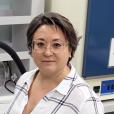
Dr Inna Karatchevtseva undertakes work at ANSTO in two main areas: defence industry research and fundamental materials research.
Australian and international researchers have used ANSTO’s Australian Synchrotron to confirm the presence of an unusual diamond found in stony meteorites.
Although Australia does not use nuclear energy for power needs, it does have the nuclear capabilities, knowledge, and expertise provided by ANSTO to ensure the national interest in nuclear matters is protected and advanced.