Frequently Asked Questions
Frequently asked questions about the ANSTO Security Process, travel funding, ANSTO Research Portal and ACNS Customer Portal.


Showing 1181 - 1200 of 1603 results
Frequently asked questions about the ANSTO Security Process, travel funding, ANSTO Research Portal and ACNS Customer Portal.

ANSTO has a variety of games and apps to educate students on how radiation works, nuclear medicine, the periodic table, and atom building.


How expensive and time consuming are your tests for optimising your catalyst?

Most fingermark research has largely focussed on the organic material in residues. Consequently, a gap in fundamental knowledge exists when it comes to inorganic components such as metals.
PhD candidate Vienna Wong is using her FutureNow Scholarship to research ultra-high temperature ceramics, which are emerging materials for extreme environments.

ANSTOs capabilities are ideally suited for these investigations relating to quantum technologies.

The ANSTO Board of Directors is appointed by the government to ensure the proper and efficient performance of the functions of ANSTO.
The Biosciences group of researchers at ANSTO supports the development and translation of radiopharmaceuticals to improve human health.
The new Micro Computed Tomography (MCT) beamline is the first instrument to become operational as part of the $94 million Project BRIGHT program, which will see the completion of eight new beamlines at ANSTO’s Australian Synchrotron.

Our people, the custodians of Australia’s nuclear and accelerator expertise, are amongst our nation’s most talented researchers, scientists, engineers and nuclear experts. Everyday we work to respond to the growing nuclear science and technology needs of Australia and the world.
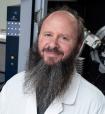


Dr Peter Kappen manages the Spectroscopy Group at the Australian Synchrotron.

Datasets from the Aerosol Sampling Program.

Andrew Douglas is Founder & Managing Director of Kandui Technologies.
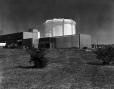
In April 15, 1953, Australia entered the nuclear science arena, when the Atomic Energy Act came into effect. The Australian Atomic Energy Commission (AAEC) followed and in 1987 the AAEC evolved into the Australian Nuclear Science and Technology Organisation (ANSTO) as it’s known today.