'Atom hunters' broadcast on ABC
Using the past to illuminate the future: Brothers collaborate on important science documentary for ABC TV


Showing 121 - 129 of 129 results
Using the past to illuminate the future: Brothers collaborate on important science documentary for ABC TV
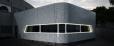
The Advanced Diffraction and Scattering beamlines (ADS-1 and ADS-2) are two independently operating, experimentally flexible beamlines that will use high-energy X-ray diffraction and imaging to characterise the structures of new materials and minerals.
Primary students across Australia were invited to create a public awareness poster for a threatened shorebird found in Australia for our 2020 Shorebirds Competition. In response to COVID-19, and the changes to children’s learning environments, we opened the competition early and also included categories for individual children to enter, as well as school children.
Radioisotopes are widely used in medicine, industry, and scientific research. New applications for radioisotopes are constantly being developed.

CORIS360® GNI images gamma-ray and thermal neutron radiation sources, delivering an unprecedented ability to detect, localise, and identify nuclear materials.

ANSTO’s user office in Melbourne offers access to the Australian Synchrotron, a world-class research facility with over 4,000 user visits per year. ANSTO seeks collaboration and partnerships with research organisations, scientific users and commercial users.
Five exceptional female science communicators are part of a larger team who use skills in education and engagement to promote an interest in science amongst the public and students.
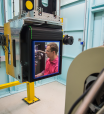
The High Performance Macromolecular Crystallography beamline will enable the study of very small (sub-5 micrometre) or weakly diffracting crystals, providing a state-of-the-art high-throughput facility for researchers. MX3 will be able to study the structures of large proteins and protein complexes for virology, drug design and industrial applications via goniometer mounted crystals, in-tray screening, or via serial crystallography methods.