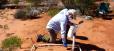
Impact of radioactivity on the biosphere
Research to determine the potential dose from long- lived radioactive substances at mining, legacy sites and nuclear facilities.


Showing 121 - 140 of 1180 results
Research to determine the potential dose from long- lived radioactive substances at mining, legacy sites and nuclear facilities.
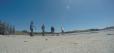
Research to provide critical knowledge on groundwater residence times, important catchments and aquifers in order to ensure sustainable yields of groundwater resources.

Research to improve knowledge of natural variability in rainfall and recharge by monitoring hydrological processes in key regions and reconstruct water recharge history.

Research to date and trace past climate change and interpret the indicators and drivers of the Earth's climate.
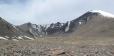
Research to assess the impact of recent landscape change by measuring fundamental geomorphic processes that are the result of long-term landscape evolution.
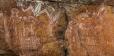
Research to identify past human interactions with the environment and clarify information which may result from human impact or responses to changing environments.

The Powder Diffraction beamline at the Australian Synchrotron is optimised for carrying out structural investigation under non ambient conditions and as a function of time.

Research on the impacts of land-use, contamination, water management and climate variability on aquatic ecosystems..
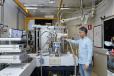
The THz/Far-IR Beamline couples the high brightness and collimation of a bend-magnet synchrotron radiation to a Bruker IFS125HR spectrometer providing high-resolution spectra (0.00096 cm-1) with signal to noise ratio superior to that of thermal sources up to 1350 cm-1 for gas-phase applications; the beamline also delivers signal to noise ratio superior to that of thermal sources up to 350 cm-1 for condensed phase samples.
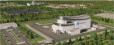
Nuclear power is used as a reliable and clean energy solution in most OECD countries and many other parts of the world. Although it is banned in Australia, a number of government reviews are looking at current prohibitions on nuclear power.
ANSTO provides secondary students with a range of learning resources for those interested in science or studying for exams. For teachers, ANSTO provides learning resources and professional development, as well as in-school-term science tours and videoconferences. Workbooks are provided as required learning material to accompany a school visit to ANSTO. They can also be used on their own as a classroom resource.
With a well-established portfolio of nuclear research and the operation of Australia's only nuclear reactor OPAL, ANSTO scientists conduct both fundamental and applied research on fuel for current, advanced, and future nuclear technology systems.

ANSTO is committed to monitoring its environmental performance and providing the community with accurate information about it. We also publish live meteorological data from our 49m Lucas Heights weather tower every 15 minutes.