
Research Scientist


Showing 121 - 140 of 361 results
ANSTO has collaborated on a study assessing the impact of the commonly-used food additive titanium dioxide (TiO2) on gut microbiota and inflammation.
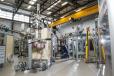
Particle Induced X-ray Emission (PIXE) is a powerful and relatively simple analytical technique that can be used to identify and quantify trace elements typically ranging from aluminium to to uranium.
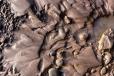
X-ray fluorescence scanner is a powerful analytical tool for environmental studies.
The National Deuteration Facility is providing deuterated cholesterol, an essential ingredient in lipid nanoparticles for the delivery of vaccines using mRNA, to academic and industry partners.
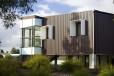
The Australian Synchrotron has an on-site Guesthouse for users and AS guests.
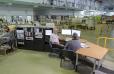
ANSTO plays a leading role in measuring and characterising fine particles from a range of locations around Australia and internationally.
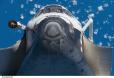
Materials researchers focus on development, performance and in-service degradation of nickel-based superalloys, reinforced carbon-Carbon (C/C) composites, and ultra-high temperature ceramics (UHTC).
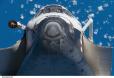
Material researchers at ANSTO use a range of in-house capabilities in the development, testing and characterisation of existing and emerging materials for extreme environments of the novel nuclear (fission/fusion) based energy-generation systems.
ANSTO is participating in a new Australian Research Council (ARC) Centre of Excellence for Indigenous and Environmental Histories and Futures (CIEHF) to be headquartered at James Cook University (JCU) that aims to bring Indigenous and environmental histories to the forefront of land and sea management.
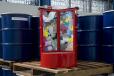
ANSTO has safely managed its radioactive waste for over 60 years. Waste is managed in accordance with national and international standards.
Beamtime guide on the SAX / WAXS beamline at the Australian Synchrotron.
The Titan Krios cryo-electron microscope reveals the inner workings of life at the cellular level.

From June to August we invited primary schools in Greater Sydney/Illawarra and Melbourne to participate in our 2019 Shorebirds Competition. Students in Years 3 to 6 were asked to create a public awareness poster for a threatened shorebird found in Australia.
A special inaugural event held by ANSTO at its Australian Synchrotron for more than 30 funding organisations has showcased the first of the $100 million BRIGHT Program’s brand new, state-of-the-art beamlines.
With the screening of the popular HBO series about Chernobyl, we asked our Nuclear Analysis team for their insights on key differences between the reactor in the TV series, a Generation II RBMK power reactor and ANSTO’s state of the art research reactor OPAL.