Seabird feathers
Advanced imaging reveals unusual, unseen patterns in seabird feathers.


Showing 1281 - 1300 of 2070 results
Advanced imaging reveals unusual, unseen patterns in seabird feathers.
ANSTO Nuclear Fuel Cycle researcher recognised for contributions to crystallography and structural chemistry on actinides and lanthanides.
The Australian Synchrotron has played a crucial role in the discovery of a new cancer drug for the treatment of leukaemia.


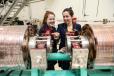
Facilitated by the Swinburne University of Technology, our school tours are designed to meet syllabus outcomes and enhance students’ understanding of nuclear science and technology.
Programs include VCE and Year 9-10 laboratory sessions, as well as school tours of the Australian Synchrotron.
ANSTO uses nuclear research techniques to address many of the important issues of our time relating to the environment, human health and industry.
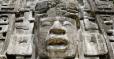
Particle induced X-ray emission can be used for quantitative analysis in archaeology, geology, biology, materials science and environmental pollution.
ANSTO completed an international overnight dash for nuclear medicine earlier this week, chartering three planes to get potentially life-saving children’s cancer treatments from Japan to hospitals across Australia.
Potential new treatments and tools for depression under development.
Australia launched a new international development project in partnership with the International Atomic Energy Agency (IAEA) to advance ‘Rays of Hope’ in the Asia and Pacific region.
International research led by Curtin University and supported by ANSTO, has identified and studied the first sauropod dinosaur gut contents found anywhere in the world. The stomach content was preserved with a reasonably complete skeleton of the Australian Cretaceous species Diamantinasaurus matildae found in Winton Queensland.
Garry McIntyre joins editorial board of Journal of Applied Crystallography.