
Senior Beamline Scientist (BioSAXS)


Showing 1341 - 1360 of 1659 results

ANSTO's Chief Nuclear Officer shares insights on the safe management of Australia's nuclear waste.
Imperial College London researchers tapped into ancient geological data locked within precariously balanced rocks using a new technique to boost the precision of hazard estimates for large earthquakes.
The analytical power of non-destructive X-ray fluorescence microscopy (XFM) at the Australian Synchrotron has been highlighted in a book chapter in Giorgione, Dante and the Sydney Incunable that features its use on an historic Renaissance work, Dante’s Commedia.
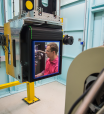
The High Performance Macromolecular Crystallography beamline will enable the study of very small (sub-5 micrometre) or weakly diffracting crystals, providing a state-of-the-art high-throughput facility for researchers. MX3 will be able to study the structures of large proteins and protein complexes for virology, drug design and industrial applications via goniometer mounted crystals, in-tray screening, or via serial crystallography methods.
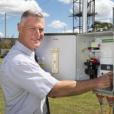

The Infrared microspectroscopy microscopes can record spectra from a range of different samples; from thin microtomed sections to polished blocks and embedded particles. This section highlights the types of samples that can be analysed using the IRM beamline


Professor Helen Garnett is a senior science leader and experienced company director, with a distinguished record spanning national science infrastructure, research and university leadership.
Early research at ANSTO has contributed to development of innovative submicron particle encapsulation technology.
Imaging protocol assesses molecular mechanism of work in the treatment of deadly childhood cancer neuroblastoma.
ANSTO has hosted for the third time the International Atomic Energy Agency’s (IAEA) Practical Introduction to Nuclear Forensics Regional Training Course.
Over the past 70 years ANSTO has been building Australia’s nuclear expertise and despite being small in scale, today we are complex and sophisticated nuclear nation.
Radiocarbon analyses on corals from two sites in Australian waters of the southwest (SW) Pacific has indicated significant changes in ocean circulation in the Pacific and large climate variability during the early to mid-Holocene period (8,000-5,400 years ago).