
Let your students lead a 30-minute Q&A session with our ANSTO experts about one of the following three topics:
- Nuclear medicines
- Nuclear techniques to study the environment
- Fission and its applications in reactors
Please ensure your students do some pre-reading about the research topic and come prepared with questions to ask during the session. We also ask that teachers send us a copy of the student questions the day before, so we can adequately prepare for your session. Teachers must be present during the session with their students.
Cost: Free

Showing 1381 - 1400 of 2480 results
Tackling climate challenges
Cosmogenic nuclides measurements at ANSTO to be part of large international Antarctic glacier research.
Significant milestone for Australia's new nuclear medicine manufacturing plant
Services - Platypus
Sample environments, Data Analysis.
Particle Induced X-ray Emission
Particle Induced X-ray Emission (PIXE) is a powerful and relatively simple analytical technique that can be used to identify and quantify trace elements typically ranging from aluminium to to uranium.
Meet an Expert
A day in the life of the OPAL multi-purpose research reactor—Part 3: Evening
Insights on Alzheimer’s disease
Combined imaging approach characterises plaques associated with disease.
PIXE
Particle induced X-ray emission can be used for quantitative analysis in archaeology, geology, biology, materials science and environmental pollution.
Innovative radioactive waste treatment technology forging ahead
International interest is building in Australia’s new multi-million-dollar radioactive waste processing facility at the Sydney campus of the Australian Nuclear Science and Technology Organisation (ANSTO).

Australian Synchrotron guesthouse
The Australian Synchrotron has an on-site Guesthouse for users and AS guests.

Animal care and ethics
ANSTO as a leading science research organization in Australia is committed to the ethical, humane and responsible care of animals used for scientific purposes.
Australia’s best and brightest nuclear scientists recognised in 2018 ANSTO Awards
The ANSTO Awards in Nuclear Science and Technology 2018 were presented on Friday 2 November at The Australian Museum, and showcased ANSTO’s unique nuclear science and technology capabilities, which enable progress in the key areas of health research and innovation for industry.
Using nuclear techniques to track micronutrients applied to wheat crops
Researchers from Murdoch University and associated collaborators are using ANSTO’s unique nuclear capabilities to gain detailed information about how wheat crops take in administered micronutrients to maximise their efficient use.
A spotlight on quinine for National Tree Day
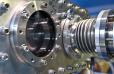
Recoil Time of Flight Spectrometry
Recoil Time of Flight Spectrometry (RTOF) is used to detect a multitude of elements by separating their masses. unambiguously
An unambiguous message of support for carbon capture: a new ARC Centre of Excellence
The ARC Centre of Excellence (CoE) for Green Electrochemical Transformation of Carbon Dioxide, GETCO2, will support innovative approaches to carbon capture.
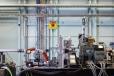
Sample Guide - XFM beamlime
Samples on the X-ray fluorescence microscopy beamline at the Australian Synchrotron.
Fission vs fusion: an explainer
The release of the Oppenheimer film, the story of the director of the Manhattan Project, has prompted many people to go online and search for an explanation of the difference between fission and fusion, two fundamental scientific concepts.
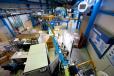
Micro-Elastic Recoil Detection Analysis
Micro-Elastic Recoil Detection Analysis (µERDA) is used to reconstruct elemental maps from scanned raster points.