New Australian led patient-care project in the Asia and Pacific region launched in partnership with the IAEA
The IAEA is providing $1.3m over four years to implement a new, Australian-led patient-care project for the Asia and Pacific region


Showing 141 - 160 of 210 results
The IAEA is providing $1.3m over four years to implement a new, Australian-led patient-care project for the Asia and Pacific region
The newly built Medicines Manufacturing Innovation Centre (MMIC), co-located at the Australian Synchrotron at Clayton, was officially opened on Wednesday by the Victorian Deputy Premier and Minister for Medical Research the Hon Ben Carroll.
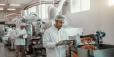
Research can improve both food processing and food product development.
Applications, Recent results, Publications.

I have a Bsc. in Chemical Engineering and Ms. In Mechanical Engineering. I am working as Mechanical Project Engineer at ANSTO. My role at ANSTO involves delivering projects while instituting process improvements and sustainable practices.
Innovative medical device Rhenium-SCT® therapy for non-melanoma skin cancer is now available in Australia


PFAS chemicals in packaging pose serious environmental and health risks, but Australia’s packaging industry is leading the way to phase them out. Backed by cutting-edge nuclear science, industry-led action is creating safer packaging solutions for all Australians.
ANSTO's reactor utilisation team has received an international award.


Steven Wolstencroft is a Consultant Health Physicist within ANSTO’s Radiation Services team.
Researchers use Kitaev theoretical model to explain unusual phenomenon in two-dimensional material.
The mechanical, electrical, chemical, optical and thermal properties of glass, as determined by its chemical composition and atomic structure, make it a highly useful material with a myriad of applications.

The International Synchrotron Access Program (ISAP) is administered by the Australian Synchrotron and is designed to assist Australian-based synchrotron users to access overseas synchrotron related facilities.
A collaboration of scientists from RMIT, ANSTO and the CSIRO has published pioneering research that brings new insights into intrinsically disordered proteins and protein regions (IDPs)/ (IDRs) and how they behave under various physiological processes.

A world-class national research facility that uses accelerator technology to produce a powerful source of light-X rays and infrared radiation a million times brighter than the sun.