Showing 141 - 160 of 430 results
Australian Nuclear Association recognises former manager of nuclear reactor and waste operations
The Australian Nuclear Association (ANA) has awarded Lubi Dimitrovski, former Manager, ANSTO Waste Operations (1995-2012) and former General Manager Nuclear Operations (2013-2018), its Award for 2022 in recognition of his leadership role in radioactive waste management in Australia.
Finalised action plan in response to Independent Review
In October, ANSTO released the Independent Safety Review of the ANSTO Health Approach to Occupational Radiation Safety and Operational Procedures.
Celebrating NAIDOC week
ANSTO proudly contributes to measures that recognise all aspects of Aboriginal and Torres Strait Islander culture and heritage during NAIDOC Week and all year.

Consultant Health Physicist, Radiation Services
As a Consultant Health Physicist within ANSTO’s Radiation Services team, Bronte brings her experience in the field of radiation detection and protection to support the development and delivery of complex programs in a commercially focu

Radioactive Waste Management Specialist
Laura Maynard is a Radioactive Waste Management Specialist working in ANSTO’s Nuclear Waste Solutions division.
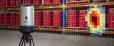
CORIS360® advanced radiation imaging solution
CORIS360 delivers fast, accurate radiation detection and imaging, making invisible radiation visible to improve safety and decision making in radioactive environments.

Radiation training terms and conditions
On behalf of ANSTO thank you for your interest in our tours. We hope your visit to ANSTO will be both enjoyable and informative.
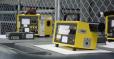
Instrument Calibration
ANSTO offers reliable and traceable calibration services for radiation survey meters, contamination monitors and electronic personal dosimeters.

COVIDSafe Plan Victoria
This COVIDSafe Plan describes the actions that ANSTO will take to keep our staff, contractors and visitors and platform users and collaborators safe and minimise the risk of the spread of COVID-19 infection.
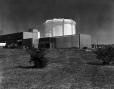
Our History
In April 15, 1953, Australia entered the nuclear science arena, when the Atomic Energy Act came into effect. The Australian Atomic Energy Commission (AAEC) followed and in 1987 the AAEC evolved into the Australian Nuclear Science and Technology Organisation (ANSTO) as it’s known today.
Single session radiation therapy nearing a reality
ANSTO’s Australian Synchrotron has been working on an initiative that could substantially improve radiotherapy treatment for cancer patients.
Research on nuclear fuel burnup supports reduction of waste and fuel costs
Recent research investigating what occurs at the interface of the uranium oxide fuel pellet and the surrounding cladding supports efforts to increase the burnup level of nuclear reactor fuel.

Visit the Australian Synchrotron
ANSTO's Melbourne location is home to the ANSTO-owned and operated Australian Synchrotron. The Synchrotron is one of the Australia's most significant pieces of scientific infrastructure.

Visit our Sydney facilities
ANSTO's Sydney locations are home to the Open Pool Australian Light-water (OPAL) multi-purpose reactor, the Centre for Accelerator Science (CAS), the Australian Centre for Neutron Scattering, the National Research Cyclotron and the National Deuteration Facility.
Why OPAL is an advanced reactor
With the screening of the popular HBO series about Chernobyl, we asked our Nuclear Analysis team for their insights on key differences between the reactor in the TV series, a Generation II RBMK power reactor and ANSTO’s state of the art research reactor OPAL.
Small Modular Reactors: An overview

Reactor systems
ANSTO researchers investigate the behavior of materials in extreme environments, to analyse and predict how they will behave under adverse conditions.
Using neutrons to show weak spots in turbines, railway lines and pipes