
Kookaburra - Ultra small angle neutron scattering
Ultra small angle neutron scattering on Kookaburra is used to study the size and shape of objects of size 10 micrometres and below.


Showing 1421 - 1440 of 1706 results
Ultra small angle neutron scattering on Kookaburra is used to study the size and shape of objects of size 10 micrometres and below.
Australian and Taiwanese scientists have discovered a new molecule which puts the science community one step closer to solving one of the barriers to development of cleaner, greener hydrogen fuel-cells as a viable power source for cars.
This month ANSTO is opening its doors to 11 talented young people from across Australia as the two-year Graduate Program kickstarts.
Senior electronics engineer from SESAME visits following donation of instrumentation to the Middle East's synchrotron in Jordan.
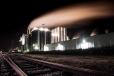
Nuclear-based energy generation systems not only provide comparatively low-cost, low-carbon emission electricity but also provide substantial amounts of process heat.
Australian and New Zealand Society of Nuclear Medicine recognises Nigel Lengkeek
ANSTO showcased its significant contribution to security, safety, and public health during a visit of the Director-General of the International Atomic Energy Agency (IAEA) Rafael Grossi, Minister for Industry and Science Ed Husic, Australian Ambassador to Austria Richard Sinclair and Ambassador for Arms Control and Counter-Proliferation Ian Biggs and other dignitaries at the weekend.
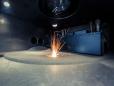
ANSTO is working with academic and industry partners on the development of multiscale numerical simulations of Laser Metal Deposition (LMD) 3D printing.
Training hosted and delivered by ANSTO on behalf of the IAEA assisted the Philippine Nuclear Research Institute (PNRI) to prepare for the successful management of a recent nuclear forensics operation.
Radiocarbon dating of mud wasp nests was used as an indirect method of dating the Gwion Gwion style.
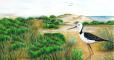
An initiative for National Science Week 2024 the Shorebirds Competition addresses the 2024 theme for National Science Week, ‘Species Survival’ and provides unique cross-curricula learning for Australian primary students in Years 3 to 6.

Highlights on the Water Isotope Network project.
The Japanese experience with leading-edge radiation treatment for cancer shows tremndous success
Recommended accommodation and transport information.