Potential true theranostic agent for cancer produced
Scandium 47, a therapeutic radioisotope and potential theranostic, has been produced for the first time at ANSTO. Theranostics are used to both diagnose and treat disease.


Showing 1441 - 1460 of 2136 results
Scandium 47, a therapeutic radioisotope and potential theranostic, has been produced for the first time at ANSTO. Theranostics are used to both diagnose and treat disease.
Successful synthesis of nano-material that improves catalytic converter efficiency.
A large collaboration of Australian and New Zealand researchers has established that a thin film technology can be used to monitor stormwater effectively and provides a way to translate the presence of metal contaminants into potential risks to aquatic ecosystems.
Two ANSTO physicist explain the three-body problem as featured in science fiction series of the same name
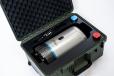
View these case studies for a more detailed look at industry challenges and how CORIS360® radiation imaging technology is improving operational decision making and keeping workers safe.
The Nobel Prizes for Physics, Chemistry and Medicine have been announced.
Australia and Sri Lanka develop action plan to fight Chronic Kidney Disease killer
Research confirms that methylcellulose, one of the most widely used hydrogel-forming materials in biomedical research and consumer products, organises itself into a structural architecture
The unique magnetic properties and nontrivial quantum effects were observed and measured in an advanced material with potential application for quantum computing.
Applications, recent results, publications.
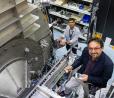
The QUOKKA instrument provides the powerful technique of small-angle neutron scattering which can look at sizes and structures of objects on the nanoscale including soft matter.
Parents can use their NSW Government Creative Kids Voucher to pay for ANSTO's School Holiday workshops.

Under the Government Procurement (Judicial Review) Act 2019 (Cth) ANSTO will publish Public Interest Certificates (PICs) for the current financial year where appropriate.
Multi-million dollar Australian Cancer Research Foundation (ACRF) Detector launched at the Australian Synchrotron,
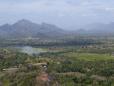
In 2017, ANSTO's CEO signed a Memorandum of Understanding with Sri Lanka to work together to investigate the epidemiology of Chronic Kidney Disease of unknown origin (CKDu).
Sample environments, Data analysis and reduction on the Koala instrument.
The Powder Diffraction beamline at the Australian Synchrotron is optimised for carrying out structural investigation under non ambient conditions and as a function of time.