

Showing 1561 - 1580 of 2203 results
Sharing expertise on next generation batteries
ANSTO neutron diffraction scientist was among the experts presenting on next-generation batteries at South Korean conference.
Important climate study
ANSTO among collaborators to major study of greenhouse gases.
Detection of gravitation waves beginning of new realm of physics
Hungarian Ambassador attends ceremony to mark installation of new imaging scanners
The Hungarian Ambassador to Australia and a small delegation visited ANSTO for a special ceremony to mark the installation and commissioning of two new nuclear medicine scanners from the Hungarian company Mediso Pacific.
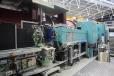
Spatz - Neutron Reflectometer
A neutron reflectometer for vertical samples.
Air pollution in Antarctica
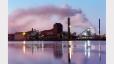
Monitoring fine particle air pollution in Newcastle
ANSTO has been measuring and characterising fine particle pollution from key sites around Australia for more than 30 years.
This data set provides records from 1998 to 2019 of the concentration of 12 elements present in fine airborne particulate matter from an air sampling station located in Mayfield in Newcastle, NSW.
Advisory Committee meets
Research portfolio and future expansion of Australian Centre for Neutron Scattering discussed
Facilities meeting
Australian Centre for Neutorn Scattering - National Deuteration Facility Advisory Committee meets
Excellence in Innovation Award for "Microclimates for high-value crops"

Deuteration Facility Chemist, National Deuteration Facility
Role at ANSTO:
Simulating phase transformations during the welding of ferritic steels

Cultural Heritage
Over the last decades, neutron, photon, and ion beams have been established as an innovative and attractive investigative approach to characterise cultural-heritage materials.
Before your experiment
As a new or returning facility user, there are certain requirements that must be completed in advance to allow you to participate in your planned ANSTO experiment(s).
German dignitary visits
German ambassador visits to see a ‘sparrow’ being assembled.
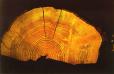
Radiocarbon dating
Radiocarbon dating is a well-known method for determining the age of materials up to the age of approximately 50,000 years.