

Showing 161 - 180 of 243 results
Research explains how some plants evolved to depend on fire for survival
Researchers based at Monash University and the Swedish Museum of Natural History have pioneered the use of nuclear imaging techniques at ANSTO’s Centre for Neutron Scattering to resolve long-standing problems in plant evolutionary history linked to wildfires.

Application Process
On this page you will find useful information about applying for a position at ANSTO and some tips on how you can prepare for an interview.
Physicist recognised for international contributions to space research

What is synchrotron light?
Synchrotron light is the electromagnetic radiation emitted when electrons, moving at velocities close to the speed of light, are forced to change direction under the action of a magnetic field.
A closer look at the scientific power of nuclear and accelerator techniques
In Part 2 of our series exploring the world of nuclear science and technology at ANSTO, we share more detailed information about the nuclear scientist’s toolkit.
Gathering international experts to expand the impact of PET imaging
ANSTO expert in molecular imaging contributed to international workshop.
ANSTO joins international counterparts in peaceful nuclear monitoring
The Australian Nuclear Science and Technology Organisation (ANSTO) has joined a team, lead by the US Department of Energy’s Pacific Northwest National Laboratory (PNNL), to install a high resolution monitoring system at ANSTO’s medical isotope production facility in Lucas Heights, Australia.
Progress on BRIGHT Project beamlines
The complex engineering of scientific instruments is explored in this 'behind the scenes' look at the installation of frontends for two new beamlines at the Australian Synchrotron.

Gamma radiation imaging technology
A new imaging technology developed at ANSTO makes it possible to image, identify and locate gamma-ray radiation in a safe and timely manner.
Managing global malnutrition: Australian researchers map micronutrients in white rice
Cosmic dust reveals Earth’s ancient atmosphere
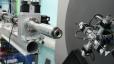
Sample Environments
Sample environment types that are available on the Powder Diffraction beamline.
Better understanding of light harvesting may benefit agriculture
Research reveals insights for childhood cancer
Modified component of green tea promises potential neuroblastoma treatment.
Meteorites from the red desert of Australia support search for life on the red planet Mars
Monash University, University of Queensland and Australian National University researchers have used ANSTO’s Australian Synchrotron in their study of meteorites found on Earth that could be used in future to find evidence of life on the planet Mars.
Elusive class of compounds found
Neutron scattering has contributed to a 'tour de force' of chemistry led by Monash University.
New partnership
Australia and Sri Lanks signs new partnership to fight chronic kidney disease.
Nurturing knowledge during National Science Week
This National Science Week, we're acknowledging the 2026 theme, “Seeds of Science: Nurturing knowledge for all” by celebrating the ideas, facilities and people that help scientific knowledge flourish with a series of activities.
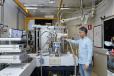
THz - Far Infrared
The THz/Far-IR Beamline couples the high brightness and collimation of a bend-magnet synchrotron radiation to a Bruker IFS125HR spectrometer providing high-resolution spectra (0.00096 cm-1) with signal to noise ratio superior to that of thermal sources up to 1350 cm-1 for gas-phase applications; the beamline also delivers signal to noise ratio superior to that of thermal sources up to 350 cm-1 for condensed phase samples.