

Showing 161 - 180 of 394 results
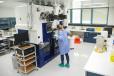
Development of radioisotopes
Research and development activity explores new, boutique radioisotopes, including positron, gamma and beta/gamma emitter. The aim is to provide material for the next generation of diagnostic and therapeutic radiopharmaceuticals
Detailed isotopic profile of groundwater in NSW can inform management of this essential resource
With world-class experts in groundwater and major contributions in this area over two decades, ANSTO completed a major project report on Improving groundwater sustainability and renewability using isotope hydrochemistry in NSW for the Department of Planning and Environment (NSW) and National Water Grid earlier in the year.
Plans to safely manage medical and research waste
ANSTO will make an application to the independent nuclear regulator, ARPANSA, to vary its license for its Interim Waste Store. The original operating license was approved in 2015, enabling the facility to hold what is called a TN-81 cask of intermediate-level radioactive waste that was safely repatriated from France in 2015.
Australia joins International Collaboration
ANSTO to contribute to research on Next Gen Nuclear Energy Systems

Principal Research Scientist, Isotope Hydrology
Role at ANSTO

Isotope Ecologist
Role at ANSTO
International collaboration to develop better nuclear fuels and materials
ANSTO contributes to state-wide survey of groundwater resources in NSW
ANSTO groundwater experts have collaborated with the NSW Department of Planning, Industry and Environment on a comprehensive survey of groundwater resources in the state.
Graduate profile - Amy MacIntosh
Environmental Scientist Amy Macintosh is researching the impact of the petroleum industry on Australian marine life.
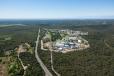
Statement of Intent
In January 2026, Mr Michael Quigley AM, ANSTO Board Chair, shared ANSTO's Statement of Intent with the Minister for Industry and Innovation, and Minister for Science.
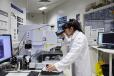
Infrared microspectroscopy
The Infrared Microspectroscopy beamline combines the high brilliance and collimation of the synchrotron beam through a Bruker V80v Fourier Transform Infrared (FTIR) spectrometer and into a Hyperion 3000 IR microscope to reach high signal-to-noise ratios at diffraction limited spatial resolutions between 3-8 μm.

Nuclear stewardship
ANSTO is Australia’s nuclear centre of excellence. It has a mandated role to advise the Australian Government on all nuclear and science technology matters.
Helping to support the environmental future of Antarctica
The start of ANSTO’s research to support the Securing Antarctica’s Environmental Future (SAEF) program commenced with the official launch of the program and the departure of two students from Queensland University of Technology (QUT), who are affiliated with ANSTO to Antarctica’s Macquarie Island for six months to collect environmental samples as part of the (SAEF) program.
Investigating the impact of radiation and radioactive contamination on forensic trace evidence

The Australian Synchrotron
A world-class national research facility that uses accelerator technology to produce a powerful source of light-X rays and infrared radiation a million times brighter than the sun.

STEAM Club Online
Learn. Create. Innovate
Nuclear technique supports industry-led action plan to phase out packaging with PFAS chemicals
Testing at ANSTO’s Centre for Accelerator Science supports an action plan just published by the Australian Packaging Covenant Organisation (APCO) to phase out per- and polyfluoroalkyl substances (PFAS) in fibre-based food contact packaging in Australia by December 2023.