ANSTO recognises scientific achievement, leadership, external collaboration and outreach at Awards event
ANSTO recognised the contribution of individuals and teams to nuclear science and technology at the 2023 ANSTO Awards Ceremony held on 25 July.


Showing 161 - 173 of 173 results
ANSTO recognised the contribution of individuals and teams to nuclear science and technology at the 2023 ANSTO Awards Ceremony held on 25 July.

In January 2026, Mr Michael Quigley AM, ANSTO Board Chair, shared ANSTO's Statement of Intent with the Minister for Industry and Innovation, and Minister for Science.

This COVIDSafe Plan describes the actions that ANSTO will take to keep our staff, contractors and visitors and platform users and collaborators safe and minimise the risk of the spread of COVID-19 infection.
ANSTO announces the recipients of the 2022 organisational awards

Role at ANSTO

Information has been provided to assist with the preparation of experiment proposals and beamtime.

Publications by ANSTO's National Deuteration Facility.

The Infrared microspectroscopy microscopes can record spectra from a range of different samples; from thin microtomed sections to polished blocks and embedded particles. This section highlights the types of samples that can be analysed using the IRM beamline
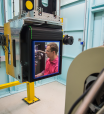
The High Performance Macromolecular Crystallography beamline will enable the study of very small (sub-5 micrometre) or weakly diffracting crystals, providing a state-of-the-art high-throughput facility for researchers. MX3 will be able to study the structures of large proteins and protein complexes for virology, drug design and industrial applications via goniometer mounted crystals, in-tray screening, or via serial crystallography methods.