
Applications - Sika
Applications and Publications


Showing 1701 - 1720 of 2699 results
Applications and Publications
Airbus Australia Pacific has provided students participating in ANSTO’s National Graduate Innovation Forum with a practical challenge relating to technology that is exposed to damaging radiation in space.
Researchers from the University of New South Wales have developed a new type of rechargeable battery that uses protons as charge carriers, offering a safer and more environmentally friendly alternative to conventional lithium-ion batteries.
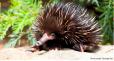
This resource guides students through how to interpret and analyse authentic research data, generated during a collaborative project between UNSW, UTS, ANSTO and Taronga Zoo Sydney. The project examines the use of high-resolution x-ray fluorescence as a tool to combat the international illegal wildlife trade (IWT) of short beaked echidnas, which are being removed from the wild and claimed as captive-bred.
Students will:
- examine the adaptations of short beaked echidnas that increase their ability to survive in their environment
- explore the use of technology in contributing to the study and conservation of biodiversity
- construct simple graphs of the provided data using MS Excel, and interpret and analyse these graphs
- investigate how scientific knowledge interacts with social, economic, cultural and ethical issues.
Evidence of the earliest occupation of the coasts of Australia from Barrow Island, Northwest Australia.

On this page you will find useful information about applying for a position at ANSTO and some tips on how you can prepare for an interview.
ANSTO has been granted a patent in Australia and a number of European countries for the separation, a key radioactive contaminant in critical minerals processing, actinium-227, from process liquors used in minerals extraction.
Australian researchers and clinicians have recently returned from Japan where they investigated the use of advanced radiation therapy for cancer using heavy ions at particle therapy facilities on a study tour .
Using isotopes to understand saltwater intrusion of Rottnest Island groundwater
ANSTO's reactor utilisation team has received an international award.
ANSTO scientist, Dr Klaus Wilcken of the Centre for Accelerator Science, used cosmogenic nuclide dating to determine the ages of layered sand and gravel samples, in which seven footprints of the flightless bird, the moa, were found on the South Island in New Zealand in 2019.
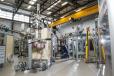
Particle Induced X-ray Emission (PIXE) is a powerful and relatively simple analytical technique that can be used to identify and quantify trace elements typically ranging from aluminium to to uranium.
Thales Australia, a key supplier to the Australian Defence Forces, provided an industrial challenge to National Graduate Innovation Forum participants relating to the production of piezoelectric ceramic components used in naval sonar arrays and systems.
Insights about Mayan Empire relevant for current climate challenges