
ANSTO STEAM Activities
ANSTO’s online STEAM activity resources encourage creative exploration of Science, Technology, Engineering and Mathematics (STEM) by incorporating the arts (the A in STEAM).


Showing 181 - 200 of 900 results
ANSTO’s online STEAM activity resources encourage creative exploration of Science, Technology, Engineering and Mathematics (STEM) by incorporating the arts (the A in STEAM).

Materials researcher with a passion for chemistry, Matthew Teusner is investigating lithium sulfur materials to support the next step in cleaner battery power.

ANSTO is seeking nominations for the ANSTO Australian Synchrotron Stephen Wilkins Thesis Medal.

Collaborators on the Magnetism project.

Timetable and Teams links

On behalf of ANSTO thank you for your interest in our tours. We hope your visit to ANSTO will be both enjoyable and informative.
$80.2 million in new funding to expand the research capabilities of the Australian Synchrotron.
ANSTO has hosted for the third time the International Atomic Energy Agency’s (IAEA) Practical Introduction to Nuclear Forensics Regional Training Course.
ANSTO is participating in a new Australian Research Council (ARC) Centre of Excellence for Indigenous and Environmental Histories and Futures (CIEHF) to be headquartered at James Cook University (JCU) that aims to bring Indigenous and environmental histories to the forefront of land and sea management.
ANSTO recognises local Indigenous heritage in new mural
Nuclear engineer, Robert Mardus-Hall, with his research partner Andrew Pastrello, are developing nuclear power based solutions for space missions to the Moon and Mars.
ANSTO is seeking nominations for the ANSTO Australian Synchrotron Stephen Wilkins Thesis Medal.

Our research group carries out fundamental research uniquely applied to industrial problems in the areas of uranium, rare earth and lithium processing.
ANSTO is seeking nominations for the ANSTO Australian Synchrotron Stephen Wilkins Thesis Medal.
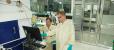
ANSTO provides a range of radiotracers for pre-clinical and clinical research using the OPAL multipurpose reactor. Users can access more than 300 known radiotracers. If a starting material is provided, new and non-commercial radiotracers can be produced.