

Showing 181 - 200 of 261 results
Neutron Reflectometry Instrument Scientist
Role at ANSTO

Applications - Echidna
Applications, recent results, publications.
National Volunteer Week 2014: Part One
Scholarship applications open
Applications are now being accepted for the Industry foundations Scholarship.

ANSTO User Meeting - Speakers
ANSTO User Meeting 2021 - Speakers
ABC showcases research on plants heading to the moon
ABC has reported space research on plants being sent to the moon at the Centre for Accelerator Science.
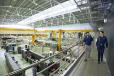
Accessing ACNS
Window into the cell
Access to a ‘window into the cell’ with University of Wollongong cryogenic electron microscope at ANSTO.

Technical Officer
Role at ANSTO

About the ANSTO Hackathon

Scientific Operations Group Leader
Role at ANSTO
Beamline Proposal & Experiment Guide
Guide to successful proposals and experiments at the Powder Diffraction beamline.
ANSTO scientist awarded Nancy Millis Medal for Women in Science by the Australian Academy of Science
One of ANSTO’s most accomplished scientists and internationally recognised energy researchers, Prof Vanessa Peterson, has been awarded the Nancy Millis Medal for Woman in Science by the Australian Academy of Science this week.

Senior Beamline Scientist (BioSAXS)
Role at ANSTO

Lead, Food Materials Science; Instrument Scientist, QUOKKA (Small-Angle Neutron Scattering); Honorary Professor, CNFS, The University of Queensland
Role at ANSTO
Using nuclear techniques to track micronutrients applied to wheat crops
Researchers from Murdoch University and associated collaborators are using ANSTO’s unique nuclear capabilities to gain detailed information about how wheat crops take in administered micronutrients to maximise their efficient use.

Feather Map of Australia

Research Program Manager
Role at ANSTO
Science Research Leader and Instrument Scientist