
2025 Think Science Competition Summary and Results
Think Science! 2025 Summary and results


Showing 181 - 200 of 2448 results
Think Science! 2025 Summary and results
The nandin Innovation Centre and Southern Sydney Innovation Network are excited to host Dr Tiffany Vora, Expert and Vice Chair Digital Biology and Medicine at Singularity University, for two presentations on Diversity and Inclusion and Biotech, along with an interview with DR KC Huang.
ANSTO participates in nuclear medicine congress
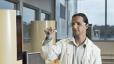
Neutron Activation Analysis (NAA) is a highly sensitive method of quantitative elemental analysis. There is a wide range of potential applications for neutron irradiations.
With all excavation completed and rock removed from the underground site, the physics lab will now be built within the caverns of the Stawell Mines site.
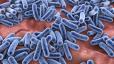
Polarised neutron scattering on Sika instrument
Two approaches use existing low cost and low energy technologies to reuse stockpiled waste from mining operations - capturing carbon dioxide in the form of valuable carbonate minerals.
Director of the Australian Synchrotron Prof Andrew Peele has been appointed to Australian Mathematical Sciences Board.
Think Science! 2023 Summary and Results
Think Science! 2023 Summary and Results
Primary students across Australia were invited to create a public awareness poster for a threatened shorebird found in Australia for our 2020 Shorebirds Competition. In response to COVID-19, and the changes to children’s learning environments, we opened the competition early and also included categories for individual children to enter, as well as school children.
From June to August we invited primary schools in Greater Sydney/Illawarra and Melbourne to participate in our 2019 Shorebirds Competition. Students in Years 3 to 6 were asked to create a public awareness poster for a threatened shorebird found in Australia.
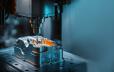
How difficult is it to relate your hard-coating failures to the chemical makeup of a material?