Clean water hackathon delivers potential solutions
Sri Lankan students took part in an innovative hackathon to develop novel solutions to a wastewater runoff problem from reverse osmosis water treatment plants.


Showing 181 - 200 of 459 results
Sri Lankan students took part in an innovative hackathon to develop novel solutions to a wastewater runoff problem from reverse osmosis water treatment plants.
Accurate ‘fingerprinting’ tool to verify source of origin is in development with collaborators from academia and industry.

BlueScope Steel Project Summary

ANSTO is committed to monitoring its environmental performance and providing the community with accurate information about it. We also publish live meteorological data from our 49m Lucas Heights weather tower every 15 minutes.
Research infrastructure will support research and development of advanced concrete.
indigenous Cultural Intellectual Property is a broader way of talking about First Peoples’ rights to their cultural heritage, traditional knowledge and cultural expressions.
Monash University, University of Queensland and Australian National University researchers have used ANSTO’s Australian Synchrotron in their study of meteorites found on Earth that could be used in future to find evidence of life on the planet Mars.
ANSTO has a role in the global monitoring system on behalf of Australia to ensure non-proliferation of weapons and that nuclear technology is only used for peaceful purposes.
Your efforts are helping better manage our wetlands and waterways, and protect the precious wetland birds that rely on them.

In Australia and the Southeast Asia basin, the ANSTO facility offers a wide range of unique nuclear-beam techniques for cultural heritage research.
nandin member, SVSR, report on their proof-of-concept for a reusable Graphene Oxide (GO) membrane to capture waste water vapours from ageing sewerage systems.

The outcome could have significant implications for better monitoring, management and remedial action of groundwater globally.

Nuclear Reaction Analysis (NRA) detects charged particles and is used predominantly to determine concentrations and depth profiles of the lighter elements.
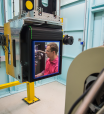
The High Performance Macromolecular Crystallography beamline will enable the study of very small (sub-5 micrometre) or weakly diffracting crystals, providing a state-of-the-art high-throughput facility for researchers. MX3 will be able to study the structures of large proteins and protein complexes for virology, drug design and industrial applications via goniometer mounted crystals, in-tray screening, or via serial crystallography methods.
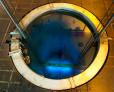
ANSTO operates a range of cobalt-60 gamma irradiators, providing the Australian community with a range of irradiation services for medical, health, industry, agriculture and research purposes.

ANSTO is Australia’s nuclear centre of excellence. It has a mandated role to advise the Australian Government on all nuclear and science technology matters.