
Beamline scientist


Showing 181 - 200 of 213 results

Dr Safavi-Naeini is the Acting Leader of the Centre for Accelerator Science. She is a particle physicist and previously had a role as a research leader at the Human Health group.
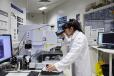
The Infrared Microspectroscopy beamline combines the high brilliance and collimation of the synchrotron beam through a Bruker V80v Fourier Transform Infrared (FTIR) spectrometer and into a Hyperion 3000 IR microscope to reach high signal-to-noise ratios at diffraction limited spatial resolutions between 3-8 μm.

ANSTO researchers are investigating nuclear propulsion systems for applications on the sea and in space.
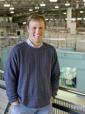
Role at ANSTO:
The Australian Government’s nuclear agency, ANSTO, together with NSW Police and multiple state and federal authorities, has completed an operation to repatriate radioactive waste from the UK.
Insights about Mayan Empire relevant for current climate challenges
A team of researchers from ANSTO and University of Technology Sydney have set a record by conducting thin film experiments at 1100 degrees C.

ANSTO announces the recipients of the 2022 organisational awards
A rare collection of traditional Aboriginal wooden objects in varying degrees of preservation found along a dry creek bed in South Australia have been dated to a period spanning 1650 to 1830 at the Centre for Accelerator Science at ANSTO.

Technology for enclosed spaces recently won global COVID19 NASA hackathon

The BRIGHT Nanoprobe beamline provides a unique facility capable of spectroscopic and full-field imaging. NANO will undertake high-resolution elemental mapping and ptychographic coherent diffraction imaging. Elemental mapping and XANES studies (after DCM upgrade) will be possible at sub-100 nm resolution, with structural features able to be studied down to 15 nm using ptychography.
ANSTO facilitating coordinated effort to find the nexus that leads to chronic kidney disease of unknown origin
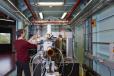
Beamtime Guide on the X-ray Fluorescence Microscopy beamline at the Australian Synchrotron.
ANSTO has supported a new study published in Quaternary Science Reviews that dates the dramatic collapse of one of the largest glaciers ever documented in the Himalayas. The findings overturn a long-held assumption about what sustains wet-climate glaciers.

The ANSTO Science Series is a live and virtual meet-up that focuses on the key capacities of ANSTO’s people, partners and facilities and how they are meeting global challenges in sustainable industries, medicine, advanced manufacturing and in accelerating small business.

This COVIDSafe Plan describes the actions that ANSTO will take to keep our staff, contractors and visitors safe and minimise the risk of the spread of COVID-19 infection.