

Showing 181 - 200 of 292 results
Nurturing knowledge during National Science Week
This National Science Week, we're acknowledging the 2026 theme, “Seeds of Science: Nurturing knowledge for all” by celebrating the ideas, facilities and people that help scientific knowledge flourish with a series of activities.
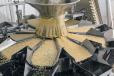
Ingredient selection
Understanding the molecular structure of ingredients can improve the qualities of food.
Analytical Experimental Officer
Role at ANSTO
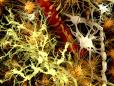
Understanding disease - Causation and progression
This program uses ANSTO’s nuclear capabilities to identify, quantify, and monitor the mechanisms which cause, or influence the development and progression of chronic diseases.
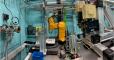
Micro-Computed Tomography beamline (MCT)
With enhanced submicron spatial resolution, speed and contrast, the Micro-Computed Tomography beamline opens a window on the micron-scale 3D structure of a wide range of samples relevant to many areas of science including life sciences, materials engineering, anthropology, palaeontology and geology. MCT will be able to undertake high-speed and high-throughput studies, as well as provide a range of phase-contrast imaging modalities.
Big Ideas
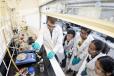
ANSTO Big Ideas encourages students to creatively communicate the work of an Australian scientist, and explain how their work has inspired them to come up with a Big Idea to make our world a better place. This competition is intended to engage and support Australian students in years 7-10 in Science and encourage them to pursue studies and careers in STEM.
Research finds possible key to long term COVID-19 symptoms
Researchers from La Trobe University have used the Australian Synchrotron to help identify a key mechanism in how SARS-CoV-2 damages lung tissue.
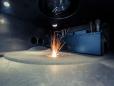
Multiscale modelling of laser-based additive manufacturing for the development of process–structure–property relationships
ANSTO is working with academic and industry partners on the development of multiscale numerical simulations of Laser Metal Deposition (LMD) 3D printing.
Tracking oxytocin to understand the biological pathways linked to human cognition and behaviour
Breakthrough on virus infecting rare and endangered parrots
12,000 year temperature record
A new continuous record of temperature dating back 12,000 years provides an import resource in understanding current and future climate changes,
Training session highlighted an approach to calculate the ingested dose of radionuclides in seafood
Dr Mathew Johansen, an environmental scientist at ANSTO, presented in an online IAEA training workshop on Advanced Topics in Radiochemistry Techniques this week.
Synchrotron used to find structure of a new material that could be found on the surface of Saturn’s moon Titan
Synchrotron light reveals secrets of mystery McCubbin

Identification and analysis of components in bruises
As blood breaks down in the skin tissue, the colour of a bruise changes with time. As such, it may be used to find out information about the age of the bruise and hence a timeframe of when the incident that caused the mark took place.
AUM2019 - Accommodation & Transport
Recommended accommodation and transport information.
Unsung Aussie Net Zero Hero
Australia’s Nuclear Science and Technology Organisation (ANSTO) is well-known for facilitating incredible science and creating life-saving nuclear medicines, but for the last 40 years it’s been quietly producing a largely unsung net zero hero: Neutron Transmutation Doped (NTD) silicon.
Exploring the role of water in the complex energy landscape of proteins
Understanding how a common food additive causes changes in the microbiome
ANSTO has collaborated on a study assessing the impact of the commonly-used food additive titanium dioxide (TiO2) on gut microbiota and inflammation.