The page you requested does not exist. For your convenience, a search was performed below using the query our facilities australian synchrotron.
More than 3,200 solar panels have been installed across the rooftops of the Australian Nuclear Science and Technology Organisation’s (ANSTO) Australian Synchrotron in Clayton, offsetting enough power to light up the whole MCG for more than five years.
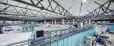
The Australian Synchrotron is a source of powerful X-rays and infrared radiation that can be used for a wide range of scientific and technical purposes. Synchrotron X-rays are millions of times brighter than those produced by conventional X-ray machines in laboratories and hospitals.
The Program Advisory Committees review proposals submitted to a particular beamline at the Australian Synchrotron
ANSTO and the National University of Singapore have signed an agreement to enable Singapore researchers to access ANSTO’s state-of-the-art beamline facilities at the Australian Synchrotron.
The newly built Medicines Manufacturing Innovation Centre (MMIC), co-located at the Australian Synchrotron at Clayton, was officially opened on Wednesday by the Victorian Deputy Premier and Minister for Medical Research the Hon Ben Carroll.
ANSTO provides multiple sources for radiation testing of materials and devices including Co-60 gamma sources, x-ray, proton and heavier ion-beams.
The International Synchrotron Access Program (ISAP) is administered by the Australian Synchrotron and is designed to assist Australian-based synchrotron users to access overseas synchrotron related facilities.
Senior electronics engineer from SESAME visits following donation of instrumentation to the Middle East's synchrotron in Jordan.
Multi-million dollar Australian Cancer Research Foundation (ACRF) Detector launched at the Australian Synchrotron,
The Australian Centre for Neutron Scattering (ACNS) is a major research facility for neutron science that comprises a suite of neutron instruments with a range of techniques for scientific investigations in physics, chemistry, materials science, medicine and environmental science among other fields.
Collaboration across the Tasman has enabled Australian and New Zealand researchers and scientists to shed light on a protein involved in diseases such as Parkinson’s disease, gastric cancer and melanoma.
Highlighting the contribution of four inspirational ANSTO leaders on International Women's Day.
Professor Peter Lay from the University of Sydney has been awarded the Australian Synchrotron Lifetime Contribution Award by ANSTO, the Australian Nuclear Science and Technology Organisation.
The Accelerator Science group purse a broad research program with the aims of improving the performance and reliability of our accelerators, increasing their research capabilities and developing the next generation of accelerator technology.
Soft X-ray experiments used to characterise new thin film topological Dirac Semimetal.
Pagination