
Indigenous Research Digital Project Map
Explore our new resource, a digital map that highlights our research projects that support the First Nations people of Australia.


Showing 1 - 20 of 532 results
Explore our new resource, a digital map that highlights our research projects that support the First Nations people of Australia.

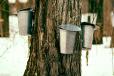
The sap extracted from Sugar Maple trees, is used to produce maple syrup. There are many conflicting theories and an absence of experimental evidence, regarding the mechanisms involved in maple sap exudation.
Discussions were held on possible areas on cooperation including research reactor operation and utilisation, environmental monitoring of mining tails, and food provenance.
An international team led by scientists at City University of Hong Kong has found flexible metal-organic framework (MOF) with one-dimensional channels that acts as a “molecular trapdoor” to selectively adsorb gases, such as carbon dioxide, in response to temperature and pressure changes.
ANSTO recognises the traditional indigenous owners of the land at all its sites and works to contribute to the recognition of the indigenous cultural heritage of Australia.
Protein found in tobacco plant can target and kill microorganisms,
Although Australia does not use nuclear energy for power needs, it does have the nuclear capabilities, knowledge, and expertise provided by ANSTO to ensure the national interest in nuclear matters is protected and advanced.
Small modular reactors can be built using Generation IV reactor technologies, that old the promise of considerably higher efficiency for decarbonised energy production and industrial heat co-generation.
Monash University, University of Queensland and Australian National University researchers have used ANSTO’s Australian Synchrotron in their study of meteorites found on Earth that could be used in future to find evidence of life on the planet Mars.
ANSTO Physicist Andrew Smith collaborates with international scientists to study historical greenhouse gas concentrations from Antarctic ice core samples.
This data set contains temperature records and concentrations of carbon dioxide and methane from the last 800,000 years.
A large collaboration of Australian and New Zealand researchers has established that a thin film technology can be used to monitor stormwater effectively and provides a way to translate the presence of metal contaminants into potential risks to aquatic ecosystems.