
Highlights - Aerosol Sampling
ANSTO has been tracking and publishing data on fine particle pollution from key sites around Australia, and internationally, for more than 20 years.


Showing 21 - 40 of 63 results
ANSTO has been tracking and publishing data on fine particle pollution from key sites around Australia, and internationally, for more than 20 years.

Role at ANSTO

See details of previously published customer updates from our Health products team.

Detailed data on ANSTO electricity use and CO2 emissions for FY2024 - FY2025



Archive of ANSTO research publications, seminars and short talks.

The Infrared microspectroscopy microscopes can record spectra from a range of different samples; from thin microtomed sections to polished blocks and embedded particles. This section highlights the types of samples that can be analysed using the IRM beamline

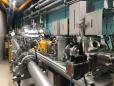
The Medium Energy- X-ray Absorption Spectroscopy beamlines provides access to XANES and EXAFS data from a bending magnet source, optimised for cutting-edge applications in biological, agricultural and environmental science in an energy range that is not currently available at the Australia Synchrotron.
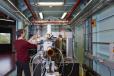
Beamtime Guide on the X-ray Fluorescence Microscopy beamline at the Australian Synchrotron.
Monash University, University of Queensland and Australian National University researchers have used ANSTO’s Australian Synchrotron in their study of meteorites found on Earth that could be used in future to find evidence of life on the planet Mars.

How to prepare samples for analysis on the Powder Diffraction beamline.

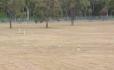
ANSTO is responsible for the Little Forest Legacy Site (LFLS) located within the ANSTO Buffer Zone boundary. This site, formerly known as the Little Forest Burial Ground (LFBG), was used by the Australian Atomic Energy Commission (AAEC) during the 1960’s to dispose of waste containing low levels of radioactivity and beryllium oxide (non-radioactive) in a series of shallow trenches. There has been regular monitoring of the site since 1966 and the results have been reported in ANSTO’s environmental monitoring reports.

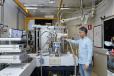
The THz/Far-IR Beamline couples the high brightness and collimation of a bend-magnet synchrotron radiation to a Bruker IFS125HR spectrometer providing high-resolution spectra (0.00096 cm-1) with signal to noise ratio superior to that of thermal sources up to 1350 cm-1 for gas-phase applications; the beamline also delivers signal to noise ratio superior to that of thermal sources up to 350 cm-1 for condensed phase samples.

ANSTO is an experienced provider of Teacher Professional Development for Australian and International teachers and our courses cover a wide range of topics. Hear from expert speakers, receive new education resources, and develop lessons for your own class.

Career Statement and Role at ANSTO