Federal grants for ANSTO expertise and infrastructure will benefit manufacturing and nuclear technologies
Three new federal grants were announced to support manufacturing and nuclear technologies.


Showing 21 - 40 of 147 results
Three new federal grants were announced to support manufacturing and nuclear technologies.
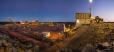
ANSTO participation in ARC on Intelligent Robotic Systems for Real-time Asset Management has potential benefit in the management of infrastructure and assets
A new study has shown that, rather than being discarded, plastics can be transformed into valuable carbon nanomaterials that help solve both energy and environmental challenges.

A new imaging technology developed at ANSTO makes it possible to image, identify and locate gamma-ray radiation in a safe and timely manner.
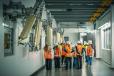
A large group of ANSTO environmental scientists and collaborators have produced the first groundwater stable isotopes, ‘isoscapes’, intuitive maps with grid data, across NSW combining new and pre-existing isotope measurements.
A new imaging technology developed at ANSTO makes it possible to image, identify and locate gamma-ray radiation in a safe and timely manner.
ANSTO announces the recipients of the 2022 organisational awards
Four successful applicants announced for the 2018 AINSE-ANSTO-French Embassy Research Internship Program.
Australia launched a new international development project in partnership with the International Atomic Energy Agency (IAEA) to advance ‘Rays of Hope’ in the Asia and Pacific region.

The SAAFE Program supports early career researchers at PhD and Postdoctoral level to expand research and innovation activities within Human Health, the Environment and the Nuclear Fuel Cycle, to initiate sustainable research networks and linkages to support Australia, New Zealand and France research and innovation.
Two ANSTO environmental scientists are part of a large team led by the Australian National University (ANU), who have received an Australian Research Council Discovery Project grant to investigate how environmental change and human activities since industrialisation have impacted the transport and deposition of toxic metals on the south coast of Australia, Tasmania, and remote Southern Ocean islands.
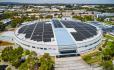
A world-class national research facility that uses accelerator technology to produce a powerful source of light-X rays and infrared radiation a million times brighter than the sun.
Principal Technical Consultant Michael Druce shares some personal insights on the design and construction of ANSTO's nuclear medicine facility.
Our research group carries out fundamental research uniquely applied to industrial problems in the areas of uranium, rare earth and lithium processing.