

Showing 21 - 40 of 127 results

SAAFE Research Internship Program
The SAAFE Program supports early career researchers at PhD and Postdoctoral level to expand research and innovation activities within Human Health, the Environment and the Nuclear Fuel Cycle, to initiate sustainable research networks and linkages to support Australia, New Zealand and France research and innovation.
Today we celebrate 65 years since the official opening of Australia’s first nuclear research reactor in 1958
ANSTO is celebrating the official opening of HIFAR, Australia’s first nuclear reactor, sixty-five years ago.
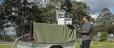
Environmental Protection
ANSTO is committed to minimising the environmental impact of its activities and to implementing strategies which have a positive effect on the environment. The ANSTO Work Health Safety and Executive Committee oversees this process.

ANSTO User Meeting 2023 - Awards
You are invited to submit to the various awards from ANSTO, User Advisory Committee (UAC) and Australian Neutron Beam User Group (ANBUG).
ANSTO scientists among recipients of 2024 Australian Neutron Users Group Awards
Publications
Publications and resources from the Powder Diffraction beamline.

Isotope Ecologist
Role at ANSTO

Water usage and discharges
ANSTO provides a summary of water usage and discharge for FY2024 - FY2025

Kookaburra (Ultra-Small-Angle Neutron Scattering)
Role at ANSTO
Two ANSTO scientists made an Officer of the Order of Australia

Industrial Liaison Manager - Senior Research Scientist
Role at ANSTO
ANSTO scientists help refine estimates of global methane emissions
A groundbreaking international study has provided new insights into global fossil methane emissions, using innovative multi-isotopic atmospheric measurements.
Independent Regulator Assessing ANSTO Infrastructure Plan

Research & Beamline Scientist
Role at ANSTO

Lead, Food Materials Science; Instrument Scientist, QUOKKA (Small-Angle Neutron Scattering); Honorary Professor, CNFS, The University of Queensland
Role at ANSTO
ANSTO welcomes $13.9M critical minerals funding
Rare earth elements will be a key area of focus for the Australian Nuclear Science and Technology Organisation’s Minerals unit as it welcomes a $13.9 million funding allocation under the Australian Critical Minerals Research and Development Hub
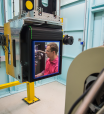
High Performance Macromolecular Crystallography Beamline (MX3)
The High Performance Macromolecular Crystallography beamline will enable the study of very small (sub-5 micrometre) or weakly diffracting crystals, providing a state-of-the-art high-throughput facility for researchers. MX3 will be able to study the structures of large proteins and protein complexes for virology, drug design and industrial applications via goniometer mounted crystals, in-tray screening, or via serial crystallography methods.
Successful ARC Discovery Project 2024

ANSTO User Meeting - Speakers
ANSTO User Meeting 2021 - Speakers