

Showing 21 - 40 of 44 results

Highlights - Aerosol Sampling
ANSTO has been tracking and publishing data on fine particle pollution from key sites around Australia, and internationally, for more than 20 years.
Beamline Scientist XFM
Role at ANSTO

Project Manager for Computing and Electronics
Dr Nick Hauser received his PhD in Physics from the University of Technology Sydney in 1994.

Principal Research Scientist, Isotope Hydrology
Role at ANSTO
COVID-19 proof, healthy workstation wins ACS COVID-19 Online Hackathon

Corporate Publications
Explore ANSTO's range of publications and reports available for the public.

Advanced Diffraction & Scattering Beamlines (ADS-1 and ADS-2) UNDER CONSTRUCTION
The Advanced Diffraction and Scattering beamlines (ADS-1 and ADS-2) are two independently operating, experimentally flexible beamlines that will use high-energy X-ray diffraction and imaging to characterise the structures of new materials and minerals.
ANSTO contributes to funded ARC Discovery and Linkage projects
Enhancing safety of trailer trucks among research projects
New Australian led patient-care project in the Asia and Pacific region launched in partnership with the IAEA
The IAEA is providing $1.3m over four years to implement a new, Australian-led patient-care project for the Asia and Pacific region

Senior Business Manager
Stewart started at ACNS in 2007 after completing his Bachelor’s degree where he completed his honours projects with ANSTO.
70 years of scientific excellence has brought significant benefits to Australia
ANSTO is a unique national science organisation that began operating under its predecessor The Australian Atomic Energy Commission (AAEC) 70 years ago.

ANSTO User Meeting - Speakers
ANSTO User Meeting 2021 - Speakers
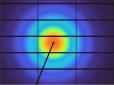
Biological small angle X-ray scattering beamline (BioSAXS)
The Biological Small Angle X-ray Scattering beamline will be optimised for measuring small angle scattering of surfactants, nanoparticles, polymers, lipids, proteins and other biological macromolecules in solution. BioSAXS combines combine a state-of-the-art high-flux small angle scattering beamline with specialised in-line protein purification and preparation techniques for high-throughput protein analysis.

Research Program Manager
Role at ANSTO
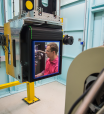
High Performance Macromolecular Crystallography Beamline (MX3)
The High Performance Macromolecular Crystallography beamline will enable the study of very small (sub-5 micrometre) or weakly diffracting crystals, providing a state-of-the-art high-throughput facility for researchers. MX3 will be able to study the structures of large proteins and protein complexes for virology, drug design and industrial applications via goniometer mounted crystals, in-tray screening, or via serial crystallography methods.

Access to information

Australian access to overseas synchrotrons
The International Synchrotron Access Program (ISAP) is administered by the Australian Synchrotron and is designed to assist Australian-based synchrotron users to access overseas synchrotron related facilities.

High-energy heavy ion microprobe
The high-energy heavy-ion microprobe is used for the characterisation or modification of material properties at depths from approximately 1 micrometre to maximum depths of up to 500 micrometres from the material surface.

Neutron Activation Analysis and Neutron Irradiation
Neutron Activation Analysis (NAA) is a highly sensitive method of quantitative elemental analysis. There is a wide range of potential applications for neutron irradiations.