The characterisation of planetary materials
ANSTO provides a range of capabilities using neutrons, X-rays and infrared radiation to study the solids, liquids and gases that might be found in materials in our solar system and beyond.


Showing 21 - 40 of 184 results
ANSTO provides a range of capabilities using neutrons, X-rays and infrared radiation to study the solids, liquids and gases that might be found in materials in our solar system and beyond.
ANSTO provides a range of capabilities using neutrons, X-rays and infrared radiation to study the solids, liquids and gases that might be found in materials in our solar system and beyond.
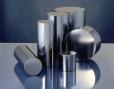
ANSTO is one of the world's leading providers of irradiation services for silicon ingots, which are used by the multimillion dollar electronics industry across Europe and Asia. Each year, ANSTO irradiates more than 50 tonnes of silicon.
ANSTO has supported research that revealed for the first time that marine reptile ichthyosaurs consumed pterosaurs before becoming prey themselves to giant marine predators.
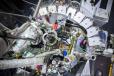
At ACNS we currently have 13 instruments in our user program, which use a variety of scattering techniques to probe materials over a range of length scales.

Australia has one multi-purpose nuclear reactor, the Open Pool Light Water Reactor (OPAL) and it is not used to generate ‘nuclear power’.
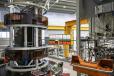
This state-of-the-art metastable-exchange optical-pumping helium-3 polarising system enables polarisation-analysis experiments on five of our existing instruments.
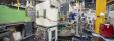
Kowari, a residual stress diffractometer, can be used for ‘strain scanning’ of large engineering components as large as 1000 kilograms.
ANSTO researchers have demonstrated longstanding expertise in the study of nuclear fuel and radioactive waste with two recent journal articles in a special issue of Frontiers of Chemistry.

CORIS360® GNI images gamma-ray and thermal neutron radiation sources, delivering an unprecedented ability to detect, localise, and identify nuclear materials.