

Showing 201 - 220 of 1226 results
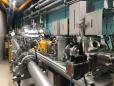
Medium Energy X-ray Absorption Spectroscopy Beamline (MEX-1 and MEX-2)
The Medium Energy- X-ray Absorption Spectroscopy beamlines provides access to XANES and EXAFS data from a bending magnet source, optimised for cutting-edge applications in biological, agricultural and environmental science in an energy range that is not currently available at the Australia Synchrotron.

Radioactive capsule goes missing in Australian outback
A tiny 8mm by 6mm radioactive capsule went missing in January 2023, somewhere along a 1400 kilometre journey from Rio Tinto’s Gudai-Darri iron ore mine to its final destination in Perth, Western Australia. Find out how ANSTO's CORIS360® technology identified the exact location of the missing source.

Privacy Policy
Australian Nuclear Science and Technology Organisation (ANSTO) is committed to protecting your personal information in accordance with the Privacy Act 1988 (Cth) (Privacy Act) and the Australian Privacy Principles.
Air Quality
ANSTO uses atmospheric radioactivity measurements, fine particle sampling and composition analysis to understand the source and impact of harmful air pollution on human health and the environment.
nandin - one year on
It’s been one year since nandin opened its doors. Let's take a look back at what we've achieved so far before setting our sights on the future.
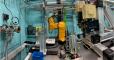
Micro-Computed Tomography beamline (MCT)
With enhanced submicron spatial resolution, speed and contrast, the Micro-Computed Tomography beamline opens a window on the micron-scale 3D structure of a wide range of samples relevant to many areas of science including life sciences, materials engineering, anthropology, palaeontology and geology. MCT will be able to undertake high-speed and high-throughput studies, as well as provide a range of phase-contrast imaging modalities.
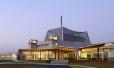
How safe is OPAL?
The OPAL research reactor's design and integrated safety features mean it is extremely safe; a fact confirmed by independent analysis.
Science shines in the Sutherland Shire
Technology pioneered at ANSTO
Technology at heart of award-winning wastewater innovation from BioGill.
World Environment Day 2019. Beating air pollution
Today is World Environment Day, a United Nations initiative for encouraging worldwide awareness and action for the environment. This year’s theme is “Beat Air Pollution”, a call to action to combat this global crisis.
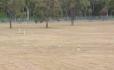
Little forest legacy site
ANSTO is responsible for the Little Forest Legacy Site (LFLS) located within the ANSTO Buffer Zone boundary. This site, formerly known as the Little Forest Burial Ground (LFBG), was used by the Australian Atomic Energy Commission (AAEC) during the 1960’s to dispose of waste containing low levels of radioactivity and beryllium oxide (non-radioactive) in a series of shallow trenches. There has been regular monitoring of the site since 1966 and the results have been reported in ANSTO’s environmental monitoring reports.
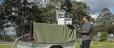
Environmental Protection
ANSTO is committed to minimising the environmental impact of its activities and to implementing strategies which have a positive effect on the environment. The ANSTO Work Health Safety and Executive Committee oversees this process.
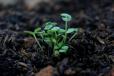
Understanding the effects of long-term cropping on organic carbon in soils
Sir William Tyree Foundation supports careers in science
Indigenous development program and nuclear science and engineering scholarships will be funded

Elements of the 21st Century 2026
Do you love science? Here is a competition for you that combines chemistry and creativity! Discover the world of elements and create a poster for your favourite element!

Reconstructing Australia’s fire history from cave stalagmites
Research is being undertaken through an Australian Research Council Discovery Project "Reconstructing Australia’s fire history from cave stalagmites", led by Professor Andy Baker at UNSW Sydney and Dr. Pauline Treble at ANSTO. The project aims to calibrate the fire-speleothem relationship and develop coupled fire and climate records for the last millennium in southwest Australia.
Scheduled maintenance shut-downs for 2020
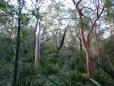
Environmental Sustainability Strategy
A high-level strategy for ANSTO to support environmental sustainability