Nanoscale insights to improve organic solar cell thin films
A large international team has provided an understanding of how nanoscale interactions affect the thermal stability of a type of next generation organic solar cells.


Showing 201 - 220 of 226 results
A large international team has provided an understanding of how nanoscale interactions affect the thermal stability of a type of next generation organic solar cells.
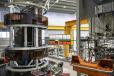
This state-of-the-art metastable-exchange optical-pumping helium-3 polarising system enables polarisation-analysis experiments on five of our existing instruments.
Researchers have demonstrated a solar-driven approach to convert glycerol, a low-value by-product of biodiesel production, into hydrogen and higher-value chemicals
The cost of building radiation-hardness testing into the design and qualification of electronics is typically well under one per cent of a major project’s budget.
Study revealed that the chemical forms of sulfur change when land is converted from undisturbed soils to cropping soils and forms of sulfur which bind strongly to the soil mineral particles remains far more stable.

ANSTO’s user office in Melbourne offers access to the Australian Synchrotron, a world-class research facility with over 4,000 user visits per year. ANSTO seeks collaboration and partnerships with research organisations, scientific users and commercial users.

Role at ANSTO

Dr Andrew Smith has just finished collecting ice cores and snow samples on the summit of Law Dome in Antarctica,
Advanced imaging reveals unusual, unseen patterns in seabird feathers.
ANSTO concluded an eventful National Science Week with a series of events celebrating how nuclear science and technology contributes to knowledge and progress.
Lake sediments as environmental archives used in compilation of data.
Wombat used in study that showed tuneable thermal expansion by controlled gas sorption.
A study has provided insight into copper sulfate pentahydrate and could give clues to how other hydrated minerals change under the pressures within planetary environments

Molten Salt Reactors (MSRs) are nuclear reactors that use a fluid fuel in the form of very hot fluoride or chloride salt rather than the solid fuel used in most reactors. Since the fuel salt is liquid, it can be both the fuel to produce heat and the coolant to transport the heat to a power plant.

Highlights of the Energy Materials Project.