Progress on new oxide ion conductors
New material shows enhanced conductivity for solid oxide fuel cells used in satellites, spacecraft, transport vehicles and as power source


Showing 201 - 220 of 1024 results
New material shows enhanced conductivity for solid oxide fuel cells used in satellites, spacecraft, transport vehicles and as power source
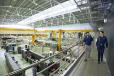

Accelerator Operator.

Applications, Recent results, Publications.
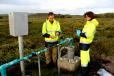
Water is a resource that needs careful management to ensure it is used sustainably. In this data set, students analyse real research data about the sustainability of groundwater on Rottnest Island.
Students will:
- understand the concepts of groundwater and aquifers and the role of the water cycle
- use MS Excel to construct simple graphs (or draw graphs by hand)
- interpret and analyse graphs and other representations of data
- investigate the effects of a changing climate on groundwater resources
- distinguish between correlation and causation
The outcome could have significant implications for better monitoring, management and remedial action of groundwater globally.

Tony is jointly responsible for the day to day maintenance, running and ongoing development of the STAR and ANTARES accelerators.
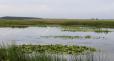
Currently ANSTO partners with the Australian Bureau of Meteorology to operate the Australian GNIP stations with samples analysed at ANSTO’s Environmental Isotope Laboratories in Sydney.
Combining scientific expertise with more than $1.3 billion in unique operational assets to provide optimal radioactive waste solutions.

I’m an electronics technician working with the Data Acquisition and Electronics Group to assist in the design, development, installation and commissioning of neutron instrument electronic systems as part of NBI2 project. My role also includes deve


In 2017, ANSTO's CEO signed a Memorandum of Understanding with Sri Lanka to work together to investigate the epidemiology of Chronic Kidney Disease of unknown origin (CKDu).

ANSTO expertise focused on understanding of reduced water levels at Thirlmere Lakes in three year collaborative project
The Australian Centre for Neutron Scattering and National Deuteration Facility have announced the first recipients of the Neutron and Deuteration Impact Awards.

The Australian Synchrotron provides an online resource for users to view publications associated with the Australian Synchrotron.
Sample environments and Data analysis

CORIS360® GNI images gamma-ray and thermal neutron radiation sources, delivering an unprecedented ability to detect, localise, and identify nuclear materials.

Role at ANSTO