
Connect with ANSTO's Women in STEM
Read about an ANSTO scientist and their work to prepare for a school project or interview.


Showing 201 - 220 of 1113 results
Read about an ANSTO scientist and their work to prepare for a school project or interview.

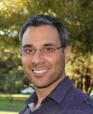
A specialist in particle therapy treatment planning from the Mayo Clinic in the US, Professor Chris Beltran, recently visited ANSTO for an exchange for information.

As a new or returning user, there are certain requirements that must be completed to ensure that your beamtime at the Australian Synchrotron runs smoothly.

The Australian Synchrotron is a source of powerful X-rays and infrared radiation that can be used for a wide range of scientific and technical purposes. Synchrotron X-rays are millions of times brighter than those produced by conventional X-ray machines in laboratories and hospitals.
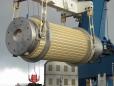
Combining scientific expertise with more than $1.3 billion in unique operational assets to provide optimal radioactive waste solutions.
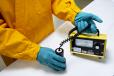
ANSTO: Australia’s knowledge centre for nuclear science and engineering.
The process by which plastic degrades in the ocean facilitates its entry into the natural carbon cycle efficiently as carbon dioxide.
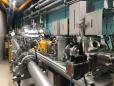
The Medium Energy- X-ray Absorption Spectroscopy beamlines provides access to XANES and EXAFS data from a bending magnet source, optimised for cutting-edge applications in biological, agricultural and environmental science in an energy range that is not currently available at the Australia Synchrotron.
A new continuous record of temperature dating back 12,000 years provides an import resource in understanding current and future climate changes,

Frequently asked questions about the ANSTO Security Process, travel funding, ANSTO Research Portal and ACNS Customer Portal.
The Australian Academy of Technology and Engineering (ATSE) has elected Professor Andrew Peele, Director of ANSTO’s Australian Synchrotron, to become a Fellow of the prestigious organisation.
ANSTO is part of collaboration conducting experiments to redefine the kilogram linking it to a fundamental constant of nature.
University of Melbourne researchers have investigated a method to produce magnetic nanoparticles in Australia for use in COVID-19 PCR tests.
The Australian Nuclear Science and Technology Organisation (ANSTO) has joined a team, lead by the US Department of Energy’s Pacific Northwest National Laboratory (PNNL), to install a high resolution monitoring system at ANSTO’s medical isotope production facility in Lucas Heights, Australia.