Aussie scientists to develop $500 million-dollar project in Mexico
Two Australian scientists have been appointed to assist with the development of a $500 million-dollar synchrotron facility in Mexico, the first and largest project of its kind.


Showing 241 - 260 of 766 results
Two Australian scientists have been appointed to assist with the development of a $500 million-dollar synchrotron facility in Mexico, the first and largest project of its kind.
nandin is ANSTO’s Innovation Centre where science and technology entrepreneurs, startups and graduates meet industry expertise to experiment, co-create, innovate, and commercialise, creating new jobs in the high-growth industries of tomorrow.
This week ANSTO formally launched the nandin Deep Technology Incubator, a full-service innovation hub that enables the best and the brightest minds to come together to foster innovation and change.
Following a decade of imaging to support research and clinical trials at ANSTO and the University of Sydney’s Brain and Mind Centre at Camperdown, two PET scanners have been transferred to the University of Wollongong.
Airbus Australia Pacific has provided students participating in ANSTO’s National Graduate Innovation Forum with a practical challenge relating to technology that is exposed to damaging radiation in space.
ANSTO has hosted its second IAEA Practical Introduction to Nuclear Forensics Regional Training Course for representatives of member countries from South-East Asia, sharing expertise on the theoretical and practical aspects of nuclear forensics to respond to incidents of nuclear or other radioactive material out of regulatory control.
ANSTO and the Embassy of Argentina in Australia proudly hosted an event commemorating the 15th anniversary of the opening of the Open Pool Australian Lightwater (OPAL) multi-purpose nuclear reactor on 18 October.
A team of scientists led by Monash University and the University of Melbourne in association with the Peter Doherty Institute for Infection and Immunity have made progress in clarifying the molecular interactions that underpin how our adaptive immune cells recognise SARS CoV-2, which causes COVID-19.
New mentor program offers deep brains trust to support the development of southern Sydney startups

The Think Science! competition encourages students in Years 3-10 to learn science inquiry skills in a fun and accessible way! Entry is FREE and there are generous prizes for winning schools. Any topic can be chosen, and special materials are not required.
Project Bright, the construction of eight new beamlines at ANSTO’s Australian Synchrotron has reached a milestone by achieving ‘First Light’ for the new micro-computed tomography (MCT) beamline in late NovembeR.
Below lists some useful programs for data reduction, search matching, analysis and structure visualisation of diffraction data.
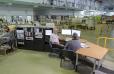
ANSTO plays a leading role in measuring and characterising fine particles from a range of locations around Australia and internationally.

The ANSTO Science Series is a live and virtual meet-up that focuses on the key capacities of ANSTO’s people, partners and facilities and how they are meeting global challenges in sustainable industries, medicine, advanced manufacturing and in accelerating small business.
In a new study published in Nature Communications, researchers from UNSW have demonstrated a more sustainable alternative: an electrochemical pathway that couples carbon dioxide and nitrogen-containing species to produce urea under mild conditions.
PNG researcher provides a progress update on an aquaculture project to improve the industry and benefit the local population
ANSTO commenced an aerosol sampling program thirty years ago this week to characterise these pollutants and ultimately, identify their sources, which has taken it to the forefront of environmental monitoring of this type in Australia and the region.
Thirty years of ANSTO's unique capability in monitoring fine particle pollution provides insight on bushfire smoke.