Nuclear forensics
ANSTO provides nuclear forensic analysis and advice in support of law enforcement and training to domestic and international partners


Showing 241 - 260 of 740 results
ANSTO provides nuclear forensic analysis and advice in support of law enforcement and training to domestic and international partners
Rutherford backscattering primarily provides information about the concentration of elements VS depth in a light material.
Nuclear science and technology award recipients to deliver Distinguished Lectures at ANSTO.
Researchers from the Health Research and Technology Group at ANSTO and the University of Wollongong have developed a new device that could improve the quality control of accelerator-based boron neutron capture therapy, a promising radiation therapy for treating aggressive cancers.
A team of Melbourne researchers and international partners from Italian Instituto Nazionale de Fisica Nucleare (INFN) and CERN, who are developing radiation-hardened semiconductor chips, used the unique state-of-art high energy ion microprobe on the SIRIUS ion accelerator at ANSTO’s Centre for Accelerator Science to test a prototype radiation-resistant computer chip
ANSTO provides secondary students with a range of learning resources for those interested in science or studying for exams. For teachers, ANSTO provides learning resources and professional development, as well as in-school-term science tours and videoconferences. Workbooks are provided as required learning material to accompany a school visit to ANSTO. They can also be used on their own as a classroom resource.
Blake Orr from ARPANSA review the Netflix series Radioactive Emergency.
Recent research investigating what occurs at the interface of the uranium oxide fuel pellet and the surrounding cladding supports efforts to increase the burnup level of nuclear reactor fuel.
Nine PhD students are taking part in a rare opportunity to deliver an innovative solution to a real-world challenge for an industry partner in ANSTO’s National Graduate Innovation Forum in association with the Australian Council of Deans of Science and the Australian Institute of Nuclear Science and Engineering.
Since 1962, the United Uranium Scholarship has helped promising young scientists in the field of nuclear energy extend their knowledge and expertise. In 2022, scholarships were awarded to several ANSTO researchers, including Phil Sutton.
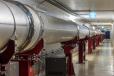
The Imaging and Medical beamline (IMBL) is a flagship beamline of the Australian Synchrotron built with considerable support from the NHMRC. It is one of only a few of its type, and delivers the world’s widest synchrotron x-ray ‘beam’.
ANSTO has hosted its second IAEA Practical Introduction to Nuclear Forensics Regional Training Course for representatives of member countries from South-East Asia, sharing expertise on the theoretical and practical aspects of nuclear forensics to respond to incidents of nuclear or other radioactive material out of regulatory control.
Australia part of global renaissance in fusion power research symbolised by ITER experiment
ANSTO has contributed to the internationally-distributed handbook on plutonium published by the American Nuclear Society.
Four annual awards in neutron scattering were announced at Australian Neutron Beam Users Group (ANBUG) and AINSE Neutron Scattering Symposium (AANSS) to individuals with strong links to ANSTO
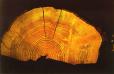
Radiocarbon dating is a well-known method for determining the age of materials up to the age of approximately 50,000 years.