

Showing 241 - 260 of 2557 results

AUM2023 Accommodation Options
Accommodation Information

Technical Information - Far infrared
Technical information on the Far Infrared beamline at the Australian Synchrotron.
Australian science teachers off to CERN
After careful selection, three Australian science teachers are set to fly to Geneva today after winning positions on the International High School Teacher Programme at CERN.
New anti-cancer drugs put cancers to sleep… permanently
Biochemical and structural studies to elucidate protein interactions of the new compounds and target molecules included X-ray diffraction at the Australian Synchrotron.
Potential true theranostic agent for cancer produced
Scandium 47, a therapeutic radioisotope and potential theranostic, has been produced for the first time at ANSTO. Theranostics are used to both diagnose and treat disease.
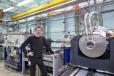
X-ray absorption spectroscopy
X-ray absorption spectroscopy (XAS) is a versatile tool for chemistry, biology, and materials science. By probing how x rays are absorbed from core electrons of atoms in a sample, the technique can reveal the local structure around selected atoms.
Australia and United States strengthen nuclear security collaboration with MoU
Although Australia does not use nuclear energy for power needs, it does have the nuclear capabilities, knowledge, and expertise provided by ANSTO to ensure the national interest in nuclear matters is protected and advanced.
Synchrotron scientist selected for ATSE Emerging Leaders network
Dr Emily Finch, Microscopy Group Manager at the Australian Synchrotron, has been selected among fourteen up-and-coming leaders of Australian science to participate in Australian Academy of Technological Sciences and Engineering (ATSE) Emerging Leaders Network 2026 which supports high-potential rising professionals in STEM.
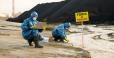
Bacteria-driven remediation of iron ore tailings
Billions of tonnes of iron ore tailings are generated each year from the mining industry. Converting these toxic tailings into soil-like materials which can develop and sustain plant and microbial communities is critical for mine site remediation and improved environmental outcomes.
Producing superconductors for quantum circuit elements at high temperatures
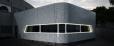
Advanced Diffraction & Scattering Beamlines (ADS-1 and ADS-2) UNDER CONSTRUCTION
The Advanced Diffraction and Scattering beamlines (ADS-1 and ADS-2) are two independently operating, experimentally flexible beamlines that will use high-energy X-ray diffraction and imaging to characterise the structures of new materials and minerals.
License to produce Lutetium-177 for clinical trials
ANSTO is proud to announce that a license has been issued by the Therapeutic Goods Administration to produce Lutetium-177 (Lu-177) for use in clinical trials.
ANSTO joins European network for radiation testing of electronics
ANSTO’s Centre for Accelerator Science has been selected as a partner facility in RADNEXT 2030, a major European initiative that provides researchers and industry with access to radiation testing infrastructure for electronics.
Neutrons produced for Canadian instruments contributed to Nobel Prize research
Synroc: Australian innovation increases technology readiness for waste treatment plant
Antarctic expedition to seek natural air cleanser in the ice sheet
ANSTO is participating in a major project to learn more about an important component of the atmosphere, the hydroxyl radical.
Greater Sydney Commission and ANSTO reveal innovation plans for Sydney’s South

Energy Materials
Creating a global energy system that is both environmentally and economically sustainable is unquestionably one of the largest challenges facing the scientific and engineering communities.
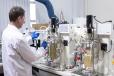
Biodeuteration
Biodeuteration involves the growth of microorganisms in a heavy water (deuterium oxide) culture medium supplemented with either a deuterated or hydrogenated carbon substrate, depending on the level of deuteration required. The biomass is harvested and the deuterated molecule (e.g. protein) is purified and characterised.