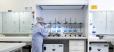
Sample preparation expertise and facilities, chemistry laboratories
The samples preparation facilities include state-of-the-art chemistry laboratories and other specialist supporting areas


Showing 261 - 280 of 2687 results
The samples preparation facilities include state-of-the-art chemistry laboratories and other specialist supporting areas
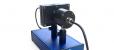
The Centre for Accelerator Science welcomes collaborations with industry for the development of new technologies,
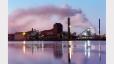
ANSTO has been measuring and characterising fine particle pollution from key sites around Australia for more than 30 years.
This data set provides records from 1998 to 2019 of the concentration of 12 elements present in fine airborne particulate matter from an air sampling station located in Mayfield in Newcastle, NSW.

Radon is a significant component of background radiation and can accumulate in poorly ventilated indoor environments.
In this data set, we investigated the effect of electrostatically charging a balloon, which was then hung in an enclosed space, on its level of radioactivity.
Students write a hypothesis, graph data, write a conclusion and use provided information to answer questions about radioactivity and radon, experimental design, accuracy, validity and reliability.
ANSTO will make an application to the independent nuclear regulator, ARPANSA, to vary its license for its Interim Waste Store. The original operating license was approved in 2015, enabling the facility to hold what is called a TN-81 cask of intermediate-level radioactive waste that was safely repatriated from France in 2015.
ANSTO announces the recipients of the 2022 organisational awards

How expensive and time consuming are your tests for optimising your catalyst?
ANSTO is proud to support calls for daring and innovative ideas to fight COVID-19 as part of the ACS online Flatten The Curve hackathon.
Principal Research Scientist Andrew Smith is travelling to the Taylor Glacier in Antarctica with American collaborators on a 3-year National Science Foundation project now in its final year that involves mining tonnes of ice for palaeoclimate research.
In a world-first study, Australian environmental scientists have used cave stalagmites as a record of groundwater replenishment over time, that showed the current level of rainfall recharging groundwater in southwest WA is at its lowest for at least the last 800 years.
Consultant appointed to consider a variety of financial, manufacture and import options.
A pioneering study led by Professor Junpei Yamanaka of Nagoya City University and an international team that included ANSTO has delivered transformative insights into the behaviour of colloidal particles under microgravity.