
Board Member
Professor Helen Garnett is a senior science leader and experienced company director, with a distinguished record spanning national science infrastructure, research and university leadership.


Showing 281 - 300 of 502 results
Professor Helen Garnett is a senior science leader and experienced company director, with a distinguished record spanning national science infrastructure, research and university leadership.

A new imaging technology developed at ANSTO makes it possible to image, identify and locate gamma-ray radiation in a safe and timely manner.
ANSTO is a partner on the National Space Qualification Network (NSQN) led by the Australian National University (ANU) that will transform Australia into a world-leading space centre by enhancing facilities to test payloads, components, and hardware prior to their use in harsh environments of space.
NSW grants bolster additive manufacturing and groundwater processing capabilities.
ANSTO welcomes the recent announcement that the inaugural CEO for the Australian Radioactive Waste Agency (ARWA) has been appointed, following a global search. Mr Sam Usher will lead ARWA and comes to the role with almost three decades of experience in the nuclear industry.

Planetary science is an emerging research theme in Australia, and research at ANSTO is embedded in the heart of this.
ANSTO providing support to emergency services, closed to non-essential staff.
ANSTO neutron diffraction scientist was among the experts presenting on next-generation batteries at South Korean conference.
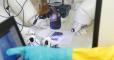
ANSTO provides nuclear forensic analysis and advice in support of law enforcement and training to domestic and international partners
The new trilateral security partnership between Australia, the UK and the US (AUKUS) is a historically significant development for nuclear science and technology in Australia.
In a new study published in Nature Communications, researchers from UNSW have demonstrated a more sustainable alternative: an electrochemical pathway that couples carbon dioxide and nitrogen-containing species to produce urea under mild conditions.

The need for a smaller, more transportable version of ANSTO’s 1500-litre atmospheric radon-222 monitor, and with a calibration traceable to the International System of Units, prompted the team to develop a 200-litre radon monitor that would meet those needs.
The nuclear medicine community has welcomed the Australian Government’s decision to provide $30 million in funding to ANSTO for the design of a new nuclear medicine manufacturing facility.
A team of Melbourne researchers and international partners from Italian Instituto Nazionale de Fisica Nucleare (INFN) and CERN, who are developing radiation-hardened semiconductor chips, used the unique state-of-art high energy ion microprobe on the SIRIUS ion accelerator at ANSTO’s Centre for Accelerator Science to test a prototype radiation-resistant computer chip
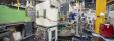
Kowari, a residual stress diffractometer, can be used for ‘strain scanning’ of large engineering components as large as 1000 kilograms.