

Showing 281 - 299 of 299 results
Symposium on advanced therapy
Science and medical experts meet in Adelaide to discuss great potential of particle therapy in Australia
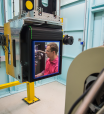
High Performance Macromolecular Crystallography Beamline (MX3)
The High Performance Macromolecular Crystallography beamline will enable the study of very small (sub-5 micrometre) or weakly diffracting crystals, providing a state-of-the-art high-throughput facility for researchers. MX3 will be able to study the structures of large proteins and protein complexes for virology, drug design and industrial applications via goniometer mounted crystals, in-tray screening, or via serial crystallography methods.
Innovator in energy and sustainability uses power of synchrotron light to make advances
Research to extend aircraft fatigue life
Carbon ion therapy
The Japanese experience with leading-edge radiation treatment for cancer shows tremndous success
Part 1: When solar radiation grounds our planes....
Radiation testing of electronic components at ANTO could benefit the aviation industry, regulators and most importantly, passengers as solar radiation events increase.

User Meeting 2020 Invited Speakers
The User Advisory Committee (UAC) are pleased to present this year's invited speakers.
High achievers join ANSTO Graduate Development Program in 2015
Analysing residual weld stresses leads to better structures
Twenty PhD students take on an innovation challenge linked to leading Australian industry partners
Nine PhD students are taking part in a rare opportunity to deliver an innovative solution to a real-world challenge for an industry partner in ANSTO’s National Graduate Innovation Forum in association with the Australian Council of Deans of Science and the Australian Institute of Nuclear Science and Engineering.
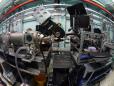
Technical information - SAXS / WAXS
Technical information on the SAXS / WAXS beamline at the Australian Synchrotron.
Water experts share insights into unique environment of Thirlmere Lakes
ANSTO has produced a comprehensive report for the NSW Department of Planning and Environment that represents a significant scientific investigation of the connections, pathways and processes of water loss from the Thirlmere Lakes system.

COVIDSafe Plan
This COVIDSafe Plan describes the actions that ANSTO will take to keep our staff, contractors and visitors safe and minimise the risk of the spread of COVID-19 infection.
Through the looking glass: the strange atomic structure of glassy materials
The mechanical, electrical, chemical, optical and thermal properties of glass, as determined by its chemical composition and atomic structure, make it a highly useful material with a myriad of applications.
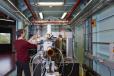
Beamtime Guide - XFM
Beamtime Guide on the X-ray Fluorescence Microscopy beamline at the Australian Synchrotron.
Investigating the impact of radiation and radioactive contamination on forensic trace evidence

Nanoprobe beamline (NANO) - under construction
The BRIGHT Nanoprobe beamline provides a unique facility capable of spectroscopic and full-field imaging. NANO will undertake high-resolution elemental mapping and ptychographic coherent diffraction imaging. Elemental mapping and XANES studies (after DCM upgrade) will be possible at sub-100 nm resolution, with structural features able to be studied down to 15 nm using ptychography.