

Showing 281 - 300 of 478 results
Disorder by design to improve material properties of sodium-ion batteries
Synchrotron shines path towards light-activated drug delivery
ANSTO researchers among materials, environment and health projects funded by new ARC grants
Food origin research in global spotlight at Expo 2025 Osaka
ANSTO highlighted its food origin research with live shows and an expert panel discussion to showcase Australian science in the Australia Pavilion at the Expo 2025 Osaka from 8-10 October.
Funding awarded to highlight leadership opportunities for women in STEM fields
Enhancing the science of rivets earns researcher early career award
Dr Rezwanul Haque, now a senior lecturer at the University of the Sunshine Coast, received a national Young Scientist Award for his earlier research using nuclear techniques at ANSTO’s Australian Centre for Neutron Scattering to find cracks and signs of stress in riveted joints in sheet metal in car bodies.
Two international agreements signed
Historic memorandums of understanding on the peaceful use of nuclear with Thailand and Canada.
Food labels can get mixed up but atoms don’t lie
ANSTO's unique capabilities are being used to develop a quick analytical tool to determine the geographic origin of seafood and authenticates quality.
ANSTO scientists to contribute to research linking Western Science and traditional Indigenous knowledge
ANSTO scientists will contribute to a new $1 million ARC Linkage Project grant to evaluate human responses to post glacial sea level rise at Red Lily, Arnhem land led by Griffith University.
Symposium on advanced therapy
Science and medical experts meet in Adelaide to discuss great potential of particle therapy in Australia
Does size matter?
Improving aquaculture for food production in Papua New Guinea
More progress understanding how COVID-19 invades the body
Using the Australian Synchrotron, an international team of researchers has characterised an important interaction that helps the SARS-CoV-2 virus invade human cells.
An excellent transitional first year at the Australian Centre for Neutron Scattering
Collaborative research has significance for ubiquitous interaction of biomolecules with water
Are landscape changes linked to loss of traditional Indigenous Australian burning techniques?
Research investigates traditional Indigenous Australian burning techniques in managing landscape and reducing fuel loads.
Haemoglobin study sheds light on one of our bodies most important molecules
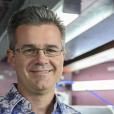
Senior Instrument Scientist, Dingo
Role at ANSTO
Dr Joseph Bevitt is a senior instrument scientist on the Dingo radiograph/tomography/imaging station, and scientific coordinator for the Australian Centre for Neutron Scattering.
A step closer to understanding superconductivity with large international collaboration
Carbon nanotubes exhibit outstanding electrochemical reduction of CO2
New class of single atoms catalysts for carbon nanotubes characterised.