

Showing 301 - 320 of 1507 results

Nanoprobe beamline (NANO) - under construction
The BRIGHT Nanoprobe beamline provides a unique facility capable of spectroscopic and full-field imaging. NANO will undertake high-resolution elemental mapping and ptychographic coherent diffraction imaging. Elemental mapping and XANES studies (after DCM upgrade) will be possible at sub-100 nm resolution, with structural features able to be studied down to 15 nm using ptychography.
ANSTO shares specialist expertise
Hosts workshop on nuclear forensics for IAEA members.
Inaugural deaf youth science camp an “incredible opportunity”
Earth-based research link to International Space Station
Neutron scattering instruments used by Japanese researchers.

Anonymised Review
ANSTO has agreed to participate in an Australian trial of a review of research infrastructure access proposals in which applicants remain anonymous to aid the removal of structural barriers to the career progression of Women in STEM.
Webinar: Strengthening the future of the nuclear workforce
Join us for this online webinar to explore and discuss the huge opportunities in growing a dynamic and impactful future nuclear workforce.
Research confirms that echidnas and platypuses descended from an aquatic ancestor
A paper led by researchers at the University of New South Wales (UNSW) published in the PNAS last year has confirmed the theory that echidnas and platypuses descended from an aquatic ancestor with fossil evidence.

STEAM Club for Girls
Offered to girls in Years 5, 6 and 7, the STEAM Club encourages creative exploration of Science, Technology, Engineering and Mathematics through the Arts (the A in STEAM).
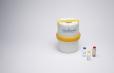
ANSTO's Gentech® Generator
Supporting healthcare professionals in Australia with easy-to-access resources related to ANSTO’s Gentech® Generator.
High performance training and sports science centre

Senior Scientist – THz Beamline
Role at ANSTO
Update on PNG aquaculture project to improve the industry and benefit the local population
PNG researcher provides a progress update on an aquaculture project to improve the industry and benefit the local population
Fission vs fusion: an explainer
The release of the Oppenheimer film, the story of the director of the Manhattan Project, has prompted many people to go online and search for an explanation of the difference between fission and fusion, two fundamental scientific concepts.

Lead Scientist – MX3 Beamline
Role at ANSTO

Safeguarding the future of Australia's nuclear medicine
The new facility will be built around a product line of ANSTO’s design – a new Technetium-99m generator – that will enable greater process automation than is possible with existing technology, leading to improvements in efficiency, quality and importantly the highest levels of production safety.

Advanced Manufacturing Supporting Green Technologies

Capabilities
For over 45 years, ANSTO has provided consultancy and process development services to the mining and minerals processing industries in Australia and globally.
Australian researchers connected to global developments in new and emerging nuclear energy technologies
The Australian Government recently signed a landmark emissions reduction technology deal with Great Britain, which includes nuclear energy and clean hydrogen among the six key low emission technologies the two countries hope to advance.
2019 Shorebirds Competition Summary and Results
From June to August we invited primary schools in Greater Sydney/Illawarra and Melbourne to participate in our 2019 Shorebirds Competition. Students in Years 3 to 6 were asked to create a public awareness poster for a threatened shorebird found in Australia.