Data Analysis
Below lists some useful programs for data reduction, search matching, analysis and structure visualisation of diffraction data.


Showing 301 - 320 of 353 results
Below lists some useful programs for data reduction, search matching, analysis and structure visualisation of diffraction data.
Development of new techniques makes it possible to date Australian Aboriginal rock art.


The first experimental evidence to validate a newly published universal law that provides insights into the complex energy states for liquids has been found using an advanced nuclear technique at ANSTO.

A unique scientific capability comprising a single research platform for high-fidelity simulation, real-time dosimetry, and biological response data is available all from a neutron instrument.
This week women in science from 16 countries came together like never before. Inspiring women, young and old, were the first to complete the W4NSEC (Women for Nuclear Science Education and Communication) program that is designed to support women who are wanting to improve their education and communication skills in nuclear science.
Australia is leading an agriculture project in the Asia and Pacific region, in partnership with the International Atomic Energy Agency (IAEA) and the Regional Cooperative Agreement for Research, Development and Training Related to Nuclear Science and Technology for Asia and the Pacific (RCA) to progress Atoms4Food.
ANSTO is taking its innovative ANSTO Synroc® and CORIS360® technologies to the world stage at the Waste Management Symposia 2024 in Phoenix, Arizona USA this week (10 – 14 March 2024). Joining over 45 other countries and around 3,000 attendees, an Australian Government contingent comprising of ANSTO and the Australian Radioactive Waste Agency is in attendance to showcase Australia’s extensive radioactive waste management capabilities.
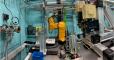
With enhanced submicron spatial resolution, speed and contrast, the Micro-Computed Tomography beamline opens a window on the micron-scale 3D structure of a wide range of samples relevant to many areas of science including life sciences, materials engineering, anthropology, palaeontology and geology. MCT will be able to undertake high-speed and high-throughput studies, as well as provide a range of phase-contrast imaging modalities.

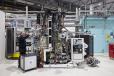
An analysis program for viewing and analysing near-edge X-ray absorption fine-structure (NEXAFS) spectra.
On average, there is now 17 per cent less rainfall across Western Australia’s south-western region than was recorded prior to 1970. This rainfall reduction has economic, social and environmental implications for the region, in particular for the growing capital of Perth, as well as water-dependent industries in the state.

The Infrared microspectroscopy microscopes can record spectra from a range of different samples; from thin microtomed sections to polished blocks and embedded particles. This section highlights the types of samples that can be analysed using the IRM beamline
ANSTO environmental scientists contribute to investigation of carbon capture in wetlands.