

Showing 301 - 320 of 552 results
'Big Ideas' bring students from across the country to Sydney
Lessons from Fukushima subject of distinguished lecture
Nuclear safety expert discusses Fukushima

Illuminating Synchrotron Science!
Melbourne

Sydney
nandin unlocks 400 years of business expertise
New mentor program offers deep brains trust to support the development of southern Sydney startups

The evolution of molten salt reactors
Molten Salt Reactors (MSRs) are nuclear reactors that use a fluid fuel in the form of very hot fluoride or chloride salt rather than the solid fuel used in most reactors. Since the fuel salt is liquid, it can be both the fuel to produce heat and the coolant to transport the heat to a power plant.
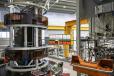
Helium 3 Polariser
This state-of-the-art metastable-exchange optical-pumping helium-3 polarising system enables polarisation-analysis experiments on five of our existing instruments.
Graduate profile - Monica Hibberd & Hamish McDougall
Monica Hibberd and Hamish McDougall are working together on research into greener and more efficient energy and battery technology.
Australian scientists helping end malaria
An accurate and inexpensive test for Malaria just around the corner
Services - Quokka
Sample environments, Data Analysis, Mail-In Services
Hackathon success continues
ANSTO-nandin hackathon teams have combined skills using science and business innovation in three successive events.
Bushfire charcoal particles carried an unprecedented distance
Charcoal particles from recent bushfires in NSW were carried 50 kilometres by the wind, which has significance for fire history reconstruction.
3D cell printing technology earns ANSTO Eureka Prize for Technology
Researchers and industry partners from UNSW Australia, the Australian Centre for Nanomedicine, Children’s Cancer Institute and Inventia Life Sciences Pty Ltd have been awarded the 2021 ANSTO Eureka Prize for Innovative Use of Technology for their method to rapidly-produce 3D cell structures

Kowari - Strain Scanner
Kowari, a residual stress diffractometer, can be used for ‘strain scanning’ of large engineering components as large as 1000 kilograms.
Going global with nuclear medicine
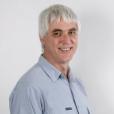
Specialist Hydrometallurgist
John Lawson is a Specialist Hydrometallurgist working with the ANSTO Minerals business unit.

Senior Business Manager
Stewart started at ACNS in 2007 after completing his Bachelor’s degree where he completed his honours projects with ANSTO.