Pass the salt: can sodium power the 21st century
Atomic structure of new cathode material for sodium ion batteries helps explain long life


Showing 341 - 360 of 540 results
Atomic structure of new cathode material for sodium ion batteries helps explain long life
An unusual and very exciting form of carbon - that can be created by drawing on paper - looks to hold the key to real-time, high throughput DNA sequencing, a technique that would revolutionise medical research and testing.

In a world-first study, Australian environmental scientists have used cave stalagmites as a record of groundwater replenishment over time, that showed the current level of rainfall recharging groundwater in southwest WA is at its lowest for at least the last 800 years.
This afternoon, the Chair of ANSTO, Dr Annabelle Bennett, wrote to all staff to let them know that CEO Dr Adi Paterson has decided to resign. She said the Board is deeply appreciative of the contributions Adi has made, including to the health, research and academic outputs of ANSTO during his tenure. Mr Shaun Jenkinson will continue as Acting CEO, while the Board undertakes a global search for a permanent CEO.
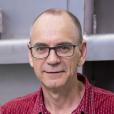
Stephen received his PhD (Physical Chemistry) from Griffith University in 1996.

After careful selection, three Australian science teachers are set to fly to Geneva today after winning positions on the International High School Teacher Programme at CERN.

Stable, highly conductive 2D nanosheets of boron nitride promising new material.
Macromolecular crystallography helps determine the atomic structure.
International collaboration uses Australian Synchrotron on pioneering malaria research.
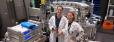
At ANSTO we have a large range of facilities that can be used to investigate planetary materials.
Guide to successful proposals and experiments at the Powder Diffraction beamline.
International research led by Curtin University and supported by ANSTO, has identified and studied the first sauropod dinosaur gut contents found anywhere in the world. The stomach content was preserved with a reasonably complete skeleton of the Australian Cretaceous species Diamantinasaurus matildae found in Winton Queensland.
A “super” receptor that helps kill HIV infected cells identified.
In Australia and the Southeast Asia basin, the ANSTO facility offers a wide range of unique nuclear-beam techniques for cultural heritage research.