

Showing 361 - 380 of 487 results

Organic Chemist / Instrument Officer
Role at ANSTO
Leena works on the development of new ligand systems for 68Ga and 177Lu.

Food provenance
ANSTO's unique capabilities are being used to develop a quick analytical tool to determine the geographic origin of seafood and authenticates quality.
Nuclear techniques confirm rare finding that crocodile devoured a baby dinosaur

Principal Research Scientist, Project Leader
Role at ANSTO
Built on their foundations: the women whose work shaped science at ANSTO
The physics and chemistry used at ANSTO is built upon, in significant part, by pioneering female scientists who were sidelined, expelled, or simply not credited appropriately for their achievements.
Advanced nuclear waste forms
Producing fish oil without odour and a longer shelf life
Research undertaken by Flinders University, the University of Cincinnati (US), Guangzhou University (China) and ANSTO has evaluated a new process to encapsulate fish oil in nanoparticles
Rhodium nanoparticles
Successful synthesis of nano-material that improves catalytic converter efficiency.
Part 2: What does a radiation event cost the aviation industry?
The cost of building radiation-hardness testing into the design and qualification of electronics is typically well under one per cent of a major project’s budget.

Melbourne Access Proposals
ANSTO’s user office in Melbourne offers access to the Australian Synchrotron, a world-class research facility with over 4,000 user visits per year. ANSTO seeks collaboration and partnerships with research organisations, scientific users and commercial users.
Running (simulated) rings around cancer
Ultra-realistic simulations of a PET imaging system for next-generation radiotherapy: Collaboration giving back to the open source science community.

Imaging Physicist
Role at ANSTO
New beamline provides state-of-the-art imaging capability
The new Micro Computed Tomography (MCT) beamline is the first instrument to become operational as part of the $94 million Project BRIGHT program, which will see the completion of eight new beamlines at ANSTO’s Australian Synchrotron.

Preclinical imaging
Expertise in the use of PET and SPECT imaging techniques to understand biological processes at the cellular and molecular level. The techniques ae also used to study disease processes and monitor the effects of new therapies
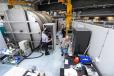
Platypus - Neutron Reflectometer
The Platypus instrument can be used to study all-manner of surface-science and interface problems, particularly related to magnetic recording materials and for polymer coatings, biosensors and artificial biological membranes.
Window into the cell
Access to a ‘window into the cell’ with University of Wollongong cryogenic electron microscope at ANSTO.
Advancing particle therapy
Meeting of minds about potential next-generation cancer treatment for Australians
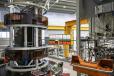
Helium 3 Polariser
This state-of-the-art metastable-exchange optical-pumping helium-3 polarising system enables polarisation-analysis experiments on five of our existing instruments.
Funding backs ANSTO‑led program to develop new treatment for deadly brain cancers
ANSTO has secured a $1.62 million Medical Research Future Fund (MRFF) grant under the Australian Brain Cancer Mission’s 2024 Brain Cancer Discovery and Translation program