Eureka Prize win for Monash University and ANSTO
Recognition of research that developed a life-saving pharmaceutical milkshake using synchrotron techniques.


Showing 361 - 380 of 995 results
Recognition of research that developed a life-saving pharmaceutical milkshake using synchrotron techniques.
A new continuous record of temperature dating back 12,000 years provides an import resource in understanding current and future climate changes,
In January 2026, Mr Michael Quigley AM, ANSTO Board Chair, shared ANSTO's Statement of Intent with the Minister for Industry and Innovation, and Minister for Science.
The celebration of the UN’s International Women’s Day 2023 has a theme that highlights the power of innovative IT to combat discrimination and the marginalisation of women globally.
Funding awarded for research on an additive manufacturing technique for use on rail infrastructure.

Two approaches use existing low cost and low energy technologies to reuse stockpiled waste from mining operations - capturing carbon dioxide in the form of valuable carbonate minerals.
Study helps make carbon dating a more accurate chronological tool.
Research has helped build a record of rainfall during the late Pleistocene and Holocene, and shed light on the strategies of Indigenous Australians to cope with a changing landscape.
Research collaboration with University of Sydney focuses on a personalised approach to cancer treatment.
Radiocarbon measurements at ANSTO’s Centre for Accelerator Science have supported research published that provided insights into what the environment was like for the Aboriginal artists who created rock art over intervals spanning 43,000 years.
ANSTO's unique capabilities are being used to develop a quick analytical tool to determine the geographic origin of seafood and authenticates quality.
Researchers developing new materials and devices that can withstand the harsh radiation environment in space are using the unique ANSTO’s capability to simulate the effects of high-energy ion irradiation on the properties and performance of these materials and devices.
ANSTO has collaborated on a study assessing the impact of the commonly-used food additive titanium dioxide (TiO2) on gut microbiota and inflammation.
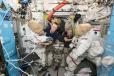
This program explores the mechanism and outcome of the interaction of radiation on biological systems in order to improve our understanding of the impact of radiation on the brain, optimise radiotherapy and develop mitigation strategies for space travellers.