Powerful new microscope a game changer in battle against disease
The Titan Krios cryo-electron microscope reveals the inner workings of life at the cellular level.


Showing 41 - 60 of 73 results
The Titan Krios cryo-electron microscope reveals the inner workings of life at the cellular level.

Dr Carol Azzam Mackay is the Design and Innovation Manager at nandin, ANSTO’s Innovation Centre.


Archive of ANSTO research publications, seminars and short talks.

The new facility will be built around a product line of ANSTO’s design – a new Technetium-99m generator – that will enable greater process automation than is possible with existing technology, leading to improvements in efficiency, quality and importantly the highest levels of production safety.

A world-class national research facility that uses accelerator technology to produce a powerful source of light-X rays and infrared radiation a million times brighter than the sun.

Research highlights how biodistribution of a toxic substance essential to understand all exposure risks.
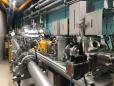
The Medium Energy- X-ray Absorption Spectroscopy beamlines provides access to XANES and EXAFS data from a bending magnet source, optimised for cutting-edge applications in biological, agricultural and environmental science in an energy range that is not currently available at the Australia Synchrotron.

ANSTO facilitating coordinated effort to find the nexus that leads to chronic kidney disease of unknown origin
The mechanical, electrical, chemical, optical and thermal properties of glass, as determined by its chemical composition and atomic structure, make it a highly useful material with a myriad of applications.

Using the past to illuminate the future: Brothers collaborate on important science documentary for ABC TV

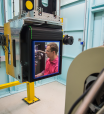
The High Performance Macromolecular Crystallography beamline will enable the study of very small (sub-5 micrometre) or weakly diffracting crystals, providing a state-of-the-art high-throughput facility for researchers. MX3 will be able to study the structures of large proteins and protein complexes for virology, drug design and industrial applications via goniometer mounted crystals, in-tray screening, or via serial crystallography methods.